Delta Hedging Explained: How Traders Stay Market Neutral

Abel ARAYA

In this article, Abel ARAYA (ESSEC Business School, Master in Finance, 2025) takes a detailed and practical look at delta hedging, a core concept in options trading. Far from being just a mathematical tool, delta hedging is a real-world technique that allows traders to manage market risk dynamically and stay focused on what they actually want to trade: volatility and relative value.

Understanding the challenge of options trading

When a trader buys or sells options, they are taking a view not only on the direction of the market but also on how much the market might move. The value of an option changes constantly, influenced by multiple factors such as the price of the underlying asset, time decay, volatility, and interest rates. Without active management, these continuous changes can make an options book risky and unpredictable.

Delta hedging addresses this by adjusting the position in the underlying asset to neutralize the impact of small price movements. The trader aims for a portfolio that reacts as little as possible to minor changes in the underlying price so that risk is concentrated on the variables they intend to trade, such as volatility.

What exactly is delta?

Delta is one of the key Greeks that measure how the price of an option responds to changes in market variables. It tracks the sensitivity of the option value to the underlying price.

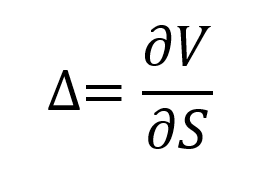
Δ = ∂V / ∂S

Here, V is the option value and S is the price of the underlying asset. For example, if a call option has a delta of 0.60, a rise of 1 euro in the underlying increases the option value by about 0.60 euro. A delta close to 1 behaves like the underlying, while a delta near 0 barely reacts to price moves.

The principle of delta neutrality

Suppose a trader has sold call options on a stock. If the stock rises, the calls gain value and the short position loses money. To offset this exposure, the trader buys shares of the underlying. The goal is to hold a number of shares that compensates the option’s delta so that small moves in the stock price do not change the portfolio value.

Δportfolio = Δoption + Δhedge = 0

The trader dynamically buys or sells the underlying to keep the combined delta close to zero.

The dynamic nature of delta

Delta changes as markets evolve, time passes, or volatility shifts. The speed of this change is captured by gamma, which measures the curvature of the option value with respect to the underlying price.

Γ = ∂²V / ∂S²

A high gamma means delta changes quickly, which forces more frequent rebalancing. Large options books can require several adjustments per day during volatile periods. In episodes of market stress, hedging flows can increase significantly as deltas move rapidly.

Hedging a single option versus a book of options

So far we have described delta hedging for a single option, but a trader on a derivatives desk rarely manages one position in isolation. In practice, the desk holds a book of hundreds or thousands of options across many underlyings, strikes and maturities. Hedging each one separately would be inefficient and very costly in transaction fees.

Instead, the trader looks at the net risk of the entire book. All the individual deltas are aggregated into a single net delta for the portfolio, and only that net exposure is hedged in the underlying. Long and short positions offset each other, so the desk usually needs far fewer hedging trades than the number of options it holds. The same logic applies to the other Greeks: the book is managed at the level of its net delta, gamma and vega rather than option by option. This portfolio approach is what makes running a large options book possible, and it is one of the core skills of a derivatives trader.

Re-hedging and trading costs

Each rebalancing operation generates transaction costs, including bid-ask spreads and slippage. Skilled traders balance precision and efficiency, deciding when to rebalance and when to tolerate a small residual exposure. Frequent re-hedging reduces risk but can erode profits through costs. The optimal approach depends on liquidity, volatility, and position size.

Why delta hedging matters

Delta hedging allows traders to isolate the risks they want to trade. By neutralizing directional exposure, they can focus on volatility, time decay or interest rate sensitivity. For instance, a volatility trader may be long options but delta-hedged, seeking to profit if realized volatility exceeds implied volatility rather than from market direction.

Securing the bank’s margin

For a bank acting as a market-maker, delta hedging is not only a risk-management tool: it is also what allows the desk to secure its margin. When the bank sells an option to a client, it charges a price that is slightly above the option’s theoretical, or fair, value given by its pricing models. That difference between the price paid by the client and the theoretical value is the bank’s margin.

By delta hedging the position dynamically, the bank replicates the payoff of the option at a cost close to its theoretical value while neutralizing the impact of market direction. If the hedging is done well, the bank is no longer betting on whether the underlying goes up or down: it has locked in that initial margin regardless of how the market moves. In other words, delta hedging turns a directional exposure into a controlled activity whose objective is to capture and protect the spread between the price sold to the client and the theoretical value of the option.

A practical example

Consider a trader who sells 5 million euros of call options on the EuroStoxx 50 with an average delta of 0.4. To stay neutral, the trader buys 2 million euros of EuroStoxx 50 futures, which offsets the option delta. If the index rises and delta increases, the trader buys more futures. If it falls, they reduce the hedge. The objective is to end the day with minimal unhedged exposure despite continuous fluctuations.

Although the mechanics look simple, judgment matters. On quiet days, fewer adjustments are needed. In unsettled markets, hedging becomes more frequent. Delta hedging therefore blends quantitative discipline with trader intuition.

Common misconceptions

Delta hedging does not eliminate all risk. It removes first-order sensitivity to small price moves. Sudden jumps in price or volatility introduce residual risks captured by higher-order Greeks such as gamma and vega. Effective options risk management considers these dimensions together.

Conclusion

Delta hedging is a practical cornerstone of modern options trading. By continuously adjusting exposure, traders can focus on pricing, volatility and liquidity rather than guessing direction. Understanding delta hedging provides a clearer view of market neutrality in practice.

Why should I be interested in this post?

If you are a student in finance interested in derivatives, trading, or risk management, delta hedging is one of the most fundamental concepts you will encounter in practice. It bridges the gap between option pricing theory and what traders actually do every day on the floor. Understanding delta hedging will give you a concrete language for discussing risk with traders and structurers in interviews, and it directly underpins roles in equity derivatives, rates options, and exotic products desks.

More broadly, the logic of delta hedging, isolating a risk you want to trade from one you do not, applies far beyond options. It is central to how banks and hedge funds manage their books across all asset classes. Whether you are targeting a front-office internship, a quant role, or a risk management position, mastering this concept will give you a genuine edge.

Related posts on the SimTrade blog

   ▶ Jayati WALIA Black-Scholes-Merton option pricing model

   ▶ Akshit GUPTA Option Greeks: Delta

   ▶ Akshit GUPTA Option Greeks: Gamma

   ▶ Akshit GUPTA Option Greeks: Vega

   ▶ Jayati WALIA Implied Volatility

   ▶ Saral BINDAL Implied Volatility and Option Prices

Useful resources

Hull J.C. (2022) Options, Futures, and Other Derivatives, Pearson, 11th Edition.

Black F. and Scholes M. (1973) The Pricing of Options and Corporate Liabilities”, Journal of Political Economy, 81(3), 637-654.

Merton R.C. (1973) Theory of Rational Option Pricing Bell Journal of Economics, 4, 141–183.

Bank for International Settlements — OTC Derivatives Statistics

About the author

The article was written in July 2026 by Abel ARAYA (ESSEC Business School, Master in Finance, 2025).

   ▶ Discover all articles by Abel ARAYA

Covered call

Covered Call

Akshit Gupta

This article written by Akshit GUPTA (ESSEC Business School, Grande Ecole Program – Master in Management, 2019-2022) presents the concept of covered call used in equities option contracts.

Introduction

Hedging is a strategy implemented by investors to reduce the risk in an existing investment. In financial markets, hedging is an effective tool used by investors to minimize the risk exposure and change the risk profile for any investment in securities. While hedging does not necessarily eliminate the entire risk for any investment, it does limit the potential losses that the investor can incur.

Option contracts are commonly used by market participants (traders, investors, asset managers, etc.) as hedging mechanisms due to their great flexibility (in terms of expiration date, moneyness, liquidity, etc.) and availability. Positions in options are used to offset the risk exposure in the underlying security, another option contract or in any other derivative contract. There are various popular strategies that can be implemented through option contracts to minimize risk and maximize returns, one of which is a covered call.

Covered call

The covered call strategy is a two-part strategy that essentially involves an investor writing a call option on an underlying security while simultaneously holding a long position in the same underlying. This action of buying an asset and writing calls on it at the same time is commonly referred as ‘buy write’. By writing a call option, the investor locks in the price of the underlying asset, thereby enjoying a short-term gain from the premium received.

Market scenario

The covered call is generally ideal if the investor has a neutral or slightly bullish outlook of the market wherein the potential future upside of the underlying asset owned by the investor is limited. This strategy is used by investors when they would prefer booking short-term profits on the assets than to keep holding it.

For instance, consider a ‘buy write’ situation where an investor buys shares of a stock (i.e., holds a long position in the stock) and simultaneously writes call options on them. The investor has a neutral view on the stock and doesn’t expect the price to rise much.
To book a short-term profit and also hedge any minor downsides in the stock price, the investor is writing call options on the stock at a strike price greater than or equal to the current price of the stock (i.e. out-of-the-money or at-the-money call options). The buyer of those call options would pay the investor a premium on those calls, whether or not the option is exercised. This is the covered call strategy in a nutshell.

Let us consider a covered call position with writing at-the money calls. One of following three scenarios may happen:

Scenario 1: the stock price does not change, and calls expire at the money

In this scenario, the market viewpoint of the investor holds correct and the profit from the strategy is the premium earned on the call options. In this case, the option holder does not exercise its call options, and the investor gets to keep the underlying stocks too.

Scenario 2: the stock price rises, and calls expire in the money

In this scenario, since the price of the stock was already locked in through the call, the investor enjoys a short-term profit along with the premium. However, this also poses a risk in case the price of the stock rises substantially because the investor misses out on the opportunity.

Scenario 3: the stock price falls and calls expire out of the money

This is a negative scenario for the investor. There is limited protection from the downside through the premium earned on the call options. However, if the stock price falls below a certain break-even point, the losses for the investor can be considerable since there will be a fall in its underlying position.

Risk profile

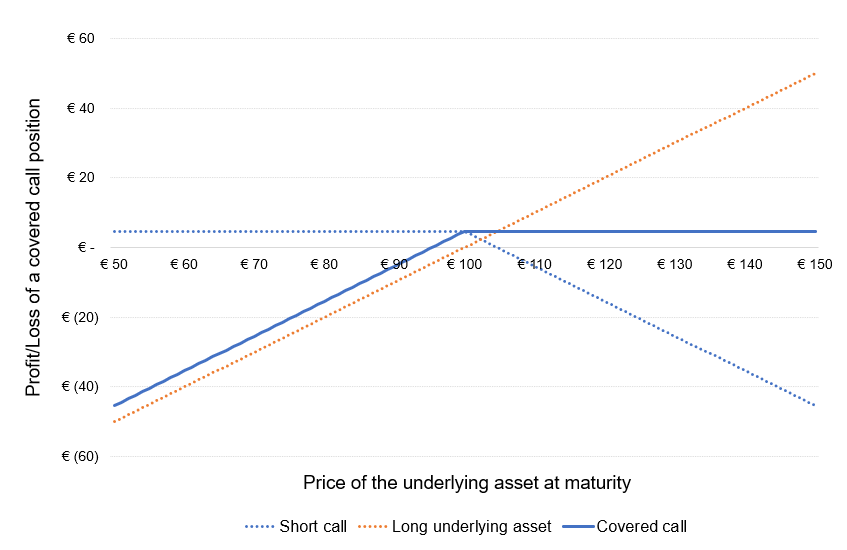
In a covered call, the total cost of the investment is equal to the price of the underlying asset minus the premium earned by writing the call. However, the profit potential for the investment is limited and the maximum loss can be significantly high. The risk profile of the position is represented in Figure 1.

Figure 1. Risk profile of covered call position.
Covered call
Source: computation by the author (based on the BSM model).

You can download below the Excel file for the computation of the Profit or Loss (P&L) function of the underlying position and covered call position.

Download the Excel file to compute the covered call value

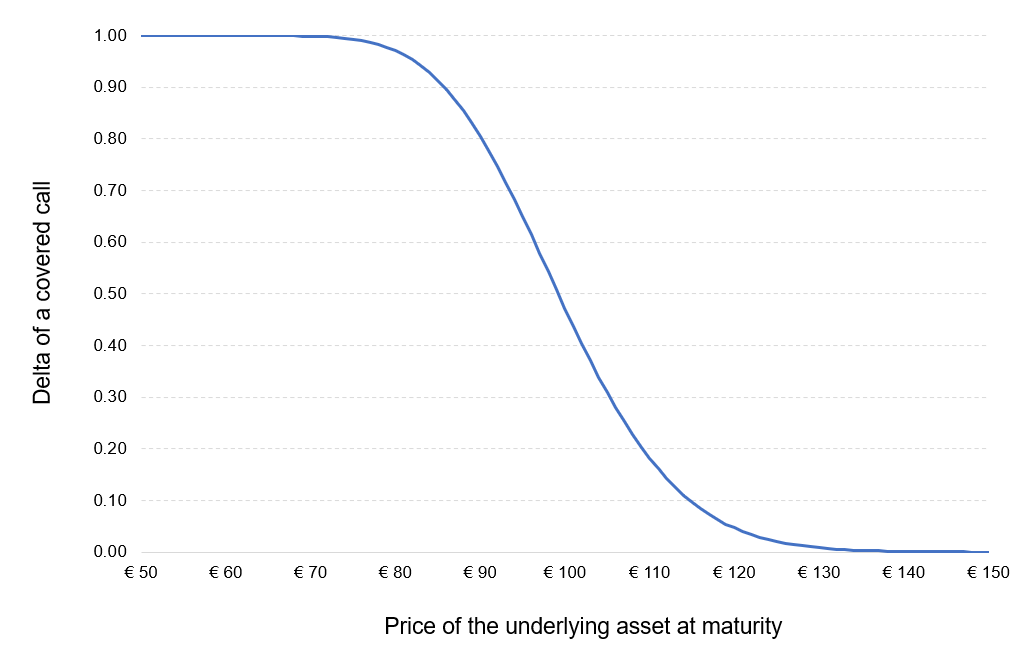
The delta of the position is equal to the sum of the delta of the long position in the underlying asset (+1) and the short position in the call option (-Δ).

Figure 2 represents the delta of the covered call position as a function of the price of the underlying asset. The delta of the call option is computed with the Black-Scholes-Merton model (BSM model).

Figure 2. Delta of a covered call position.
Delta of a covered call position
Source: computation by the author (based on the BSM model).

You can download below the Excel file for the computation of the delta of a protective put position.

Download the Excel file to compute the delta of the covered call position

Example

An investor holds 100 shares of Apple bought at the current price of $144 each. The total investment is then equal to $14,400. She is neutral about the short-term prospects of the market. In order to gain from her market scenario, she decides to write an at-the-money call option at $144 on the Apple stock (lot size is 100) with a maturity of one month, using the covered call strategy.

We use the following market data: the current price of Appel stock is $144, the implied volatility of Apple stock is 22.79%, and the risk-free interest rate is equal to 1.59%.

Based on the Black-Scholes-Merton model, the price of the call option is $3.87.

Let us consider three scenarios at the time of maturity of the call option:

Scenario 1: stability of the price of the underlying asset at $144

The total cost of the initial investment is the cost of acquiring the Apple stocks ($14,400) minus the premium received on writing the calls ($387 = $3.87*100), which is equal to $14,013, i.e. $14,400 – $387.

As the stock price ($144) is equal to the strike price of the call options ($144), the value of the call options is equal to zero, and the investor earns a profit which is equal to the initial price of the call options (the premium), which is equal to $387.

Scenario 2: an increase in the price of the underlying asset to $155

The total cost of the initial investment is the cost of acquiring the Apple stocks ($14,400) minus the premium on writing the calls ($387 = $3.87*100), which is equal to $14,013, i.e. $14,400 – $387.

As the stock price has risen to $155, the call options are exercised by the option buyer, and the investor will have to sell the Apple stocks at the strike price of $144.

By executing the covered call strategy, the investor earns $387 (i.e. ($144-$144)*100 +$387) but misses the opportunity of earning higher profits by selling the stock at the current market price of $155.

Scenario 3: a decrease in the price of the underlying asset to $142

The total cost of the initial investment is the cost of acquiring the Apple stocks ($14,400) minus the premium on writing the calls ($387 = $3.87*100), which is equal to $14,013, i.e. $14,400 – $387.

As the stock price is at $142, the call options are not exercised by the option buyer and the options expire worthless (out of the money).

As the buyer does not exercise the call options, the investor earns a profit which is equal to the price of the call options which is equal to $387. But his net profit decreases by the amount of the decrease in his position in the APPLE stocks which is equal to -$200 (i.e. ($142-$144)*100).

Related Posts

   ▶ All posts about Options

   ▶ Akshit GUPTA Options

   ▶ Akshit GUPTA Option Trader – Job description

   ▶ Akshit GUPTA The Black-Scholes-Merton model

   ▶ Akshit GUPTA Protective Put

   ▶ Akshit GUPTA Option Greeks – Delta

Useful Resources

Research articles

Black F. and M. Scholes (1973) “The Pricing of Options and Corporate Liabilities” The Journal of Political Economy, 81, 637-654.

Merton R.C. (1973) “Theory of Rational Option Pricing” Bell Journal of Economics, 4(1): 141–183.

Books

Hull J.C. (2015) Options, Futures, and Other Derivatives, Ninth Edition, Chapter 10 – Trading strategies involving Options, 276-295.

Wilmott P. (2007) Paul Wilmott Introduces Quantitative Finance, Second Edition, Chapter 8 – The Black Scholes Formula and The Greeks, 182-184.

About the author

Article written in December 2021 by Akshit GUPTA (ESSEC Business School, Grande Ecole Program – Master in Management, 2019-2022).

Option Greeks – Delta

Akshit Gupta

This article written by Akshit GUPTA (ESSEC Business School, Grande Ecole Program – Master in Management, 2019-2022) presents the technical subject of delta, an option Greek used in option pricing and hedging.

Introduction

Option Greeks are sophisticated financial metric used by trader to calculate the sensitivity of option contracts to different factors related to the underlying asset including the price of the underlying, its volatility, and time value. The Greeks are used as an effective tool to practice different hedging strategies and eliminate risks in a position. They also help to optimize the options positions at any point in time.

Delta is a type of option Greek which is used to compute the sensitivity or rate of change in price of the option contract with respect to the change in price of the underlying asset. It is denoted by the Greek letter (Δ). The formula for calculating the delta of an option contract is:

Formula for the delta of an option

Where V is the value of the option and S the price of the underlying asset.

For example, if an option on Apple stock has a delta of 0.3, it essentially means that a $1 change in the price of the underlying asset i.e., Apple stock, will lead to a change of $0.3 in the price of the option contract.

When a trader takes a position based on the delta sensitivity of any option contract, it is called delta hedging. The goal is to achieve a delta-neutral portfolio and eliminate the risks associated with movement in the prices of the underlying. Due to the complexity of the tool, delta hedging is generally practiced by professional traders in large financial institutions. In options, the delta of any call option is always positive whereas the delta of a put option is always negative.

Delta formula

Call option

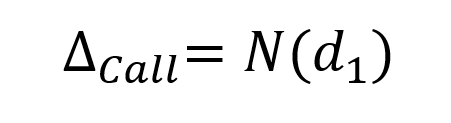
According the Black-Scholes-Merton model, the formula for calculating the delta for a European-style call option on a non-dividend paying stock is given by:

Formula for the delta of a call option

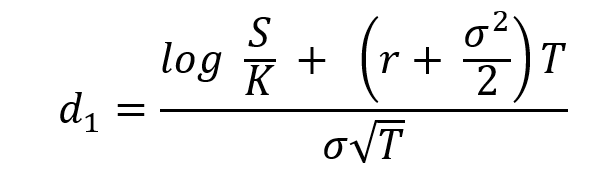
Where N represents the cumulative distribution function of the normal distribution and d1 is given by:

Formula for d1

Where S is the price of the underlying asset (at the time of valuation of the option), σ the volatility in the price of the underlying asset, T time to maturity of the option, K the strike price of the option, and r the risk-free rate of return.

Put option

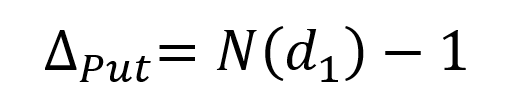
According the Black-Scholes-Merton model, the formula for calculating the delta for a European-style put option on a non-dividend paying stock is given by:

Formula for the delta of a put option

Delta as a function of the price of the underlying asset

Call option

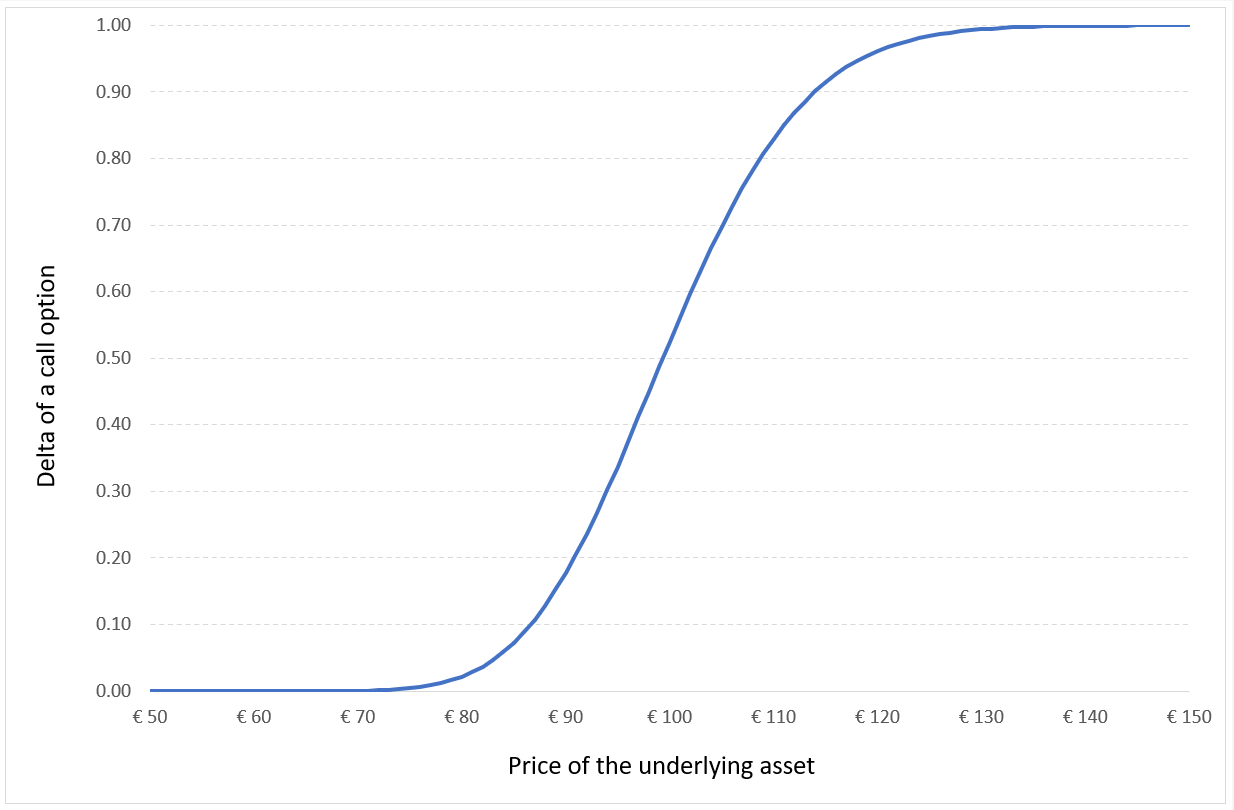
The delta as a function of the price of the underlying asset for a European-style call option is represented in Figure 1.

Figure 1. Delta of a call option.
Delta of a call option
Source: computation by the author (Model: Black-Scholes-Merton).

For a call option, the delta increases from 0 (out-of-the-money option) to 1 (in-the-money option).

Put option

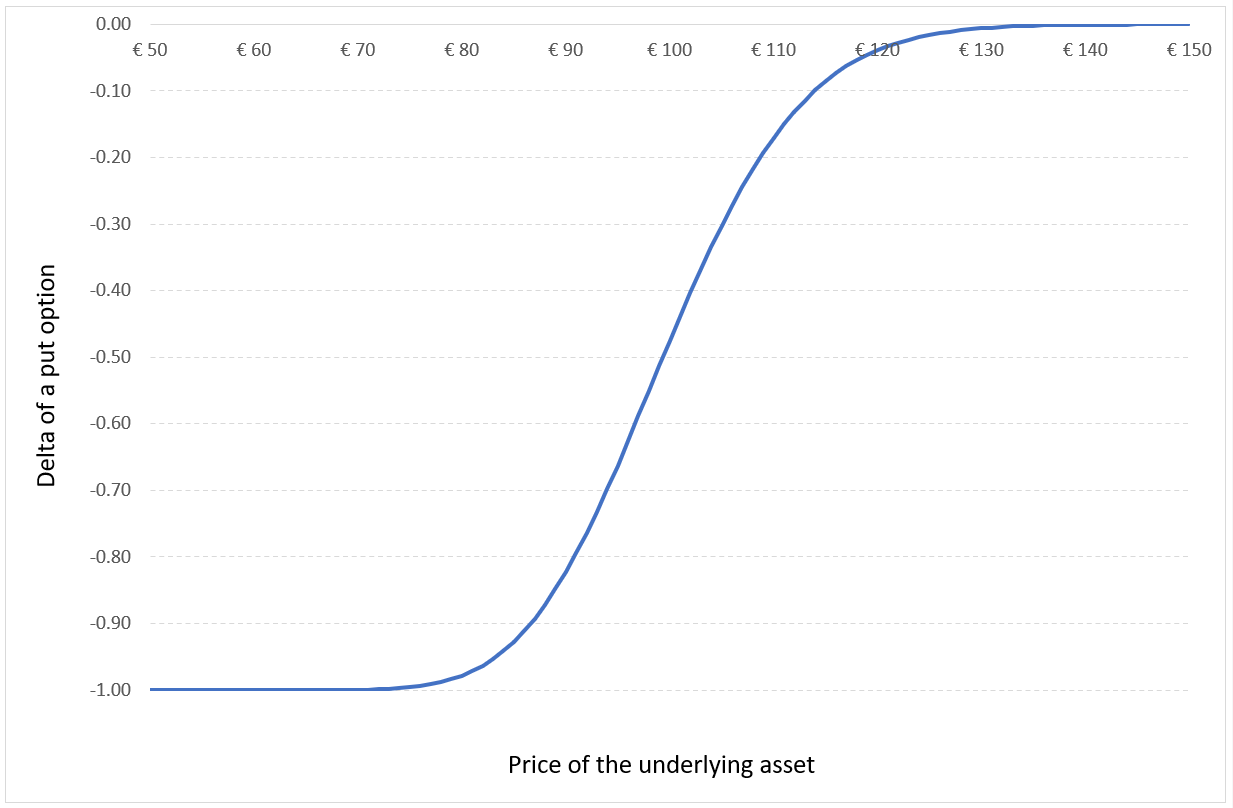
The delta as a function of the price of the underlying asset for a European-style put option is represented in Figure 2.

Figure 2. Delta of a put option.
Delta of a put option
Source: computation by the author (Model: Black-Scholes-Merton).

For a put option, the delta increases from -1 (in-the-money option) to 0 (out-of-the-money option).

Excel pricer to calculate the delta of an option

You can download below an Excel file for an option pricer (based on the Black-Scholes-Merton or BSM model) which allows you to calculate the delta of a European-style call option.

Download the Excel file to compute the delta of a European-style call option

Delta Hedging

A trader holding an option contract uses delta hedging to offset the risks associated with the price movement in the underlying asset by continuously buying and selling the underlying asset to achieve delta neutrality. This is used by option traders in financial institutions to manage their option book (the delta is computed at the option level and aggregated at the book level) and generate the margin the bank of the option writing activity.

The delta of an option contract keeps on changing as the prices of the underlying and the option contract changes. So, to maintain the delta neutrality the trader must constantly monitor the markets and execute trades to achieve neutrality. The process of continuously buying or selling the underlying asset is called dynamic hedging in options.

At the first order, the change of the value of a delta-hedged call option over the period from t to t+ δt would be equal to the risk-free rate (r) over the period:

Formula for the delta hedging of a call option

Limitations of delta hedging

Although delta hedging is a useful tool to offset the risks associated to the movement in the price of an underlying, it comes with some limitations which are:

Transaction cost

Since delta hedging requires constantly buying or selling the underlying asset, it comes with a high transaction cost. This makes delta hedging an expensive tool to optimize the portfolio against price risk. In practice, traders would adjust their option position from time top time.

Illiquid Markets

When the market for an asset is illiquid, it is difficult to practice delta hedging as the trader will not be able to constantly buy or sell the underlying asset to neutralize the price impact.

Example for calculating delta

Let us consider a call option contract with the following characteristics: the underlying asset is an Apple stock, the option strike price (K) is equal to $300 and the time to maturity (T) is of one month (i.e., 0.084 years).

At the time of valuation, the price of the Apple stock (S) is $300, the volatility (σ) of Apple stock is 30% and the risk-free rate (r) is 3% (market data).

The delta of a call option is approximately equal to 0.50238.

Using the above value, we can say that due to a $1 change in the price of the underlying asset, the price of the option will change by $0.50238.

Related posts on the SimTrade blog

All posts about Options

▶ Akshit GUPTA Options

▶ Akshit GUPTA History of Options markets

▶ Akshit GUPTA Option Trader – Job description

Option pricing and Greeks

▶ Jayati WALIA Black-Scholes-Merton option pricing model

▶ Akshit GUPTA Option Greeks – Gamma

▶ Akshit GUPTA Option Greeks – Theta

▶ Akshit GUPTA Option Greeks – Vega

Useful resources

Research articles

Black F. and M. Scholes (1973) The Pricing of Options and Corporate Liabilities The Journal of Political Economy, 81, 637-654.

Merton R.C. (1973) Theory of Rational Option Pricing Bell Journal of Economics, 4(1): 141–183.

Books

Hull J.C. (2015) Options, Futures, and Other Derivatives, Ninth Edition, Chapter 19 – The Greek Letters, 424 – 431.

Wilmott P. (2007) Paul Wilmott Introduces Quantitative Finance, Second Edition, Chapter 8 – The Black Scholes Formula and The Greeks, 182-184.

About the author

Article written in August 2021 by Akshit GUPTA (ESSEC Business School, Grande Ecole Program – Master in Management, 2019-2022).