My professional experience as an intern at Caisse des Dépôts

My professional experience as an intern at Caisse des Dépôts

Louise Pizon

In this article, Louise PIZON (ESSEC Business School, Master in Strategy & Management of International Business (SMIB), 2020-2022) presents her internship experience at Bank of Territories from La Caisse des Dépôts in the Social and Solidarity Economy.

About the company

Caisse des Dépôts et Consignations (CDC), sometimes referred as Caisse des Dépôts, is a French public financial institution created in 1816. Under the direct control of a supervisory commission reporting to Parliament, it carries out general interest activities on behalf of the State and local authorities as well as competitive activities. It employs both civil servants and private-sector personnel under collective agreements.

Launched in 2018, Bank of Territories is a department of CDC. It supports local players in the service of regional development. It offers tailored advisory and financing solutions in loans and investments to meet the needs of local authorities, social housing organizations, local public companies and the legal professions. Bank of Territories also forges strategic partnerships with companies and financial players to carry out projects with a strong territorial impact. It is aimed at all territories, from rural areas to metropolitan areas, with the ambition of fighting against social inequalities and territorial fractures.

It mobilizes 20 billion by year to finance projects for local authorities and social housing actors. It has 35 local offices to ensure greater proximity to its clients. In September 2020, the Bank of Territories and BPI France launched a €40 billion “climate plan” over five years to support French companies in their ecological transition. Priority is given to building renovations and the development of renewable energies, with more than €14 billion budget for each. The rest of the budget should be devoted to innovation (5.6 billion euros), mobility (3.5 billion euros) and industry (1.5 billion euros).

To give an example, in 2013, the Caisse des Dépôts with the help of the State launched the waste recycling and insertion project in Haute Marne. The SCIC (Société Coopérative d’Intérêt Collectif) is called DIB 52 and consists of transforming common industrial waste (CIW), via the creation of platforms allowing the sorting and transformation of CIW into solid recovered fuel (SRF). This project has made it possible to respond to environmental issues thanks to an innovative industrial solution and, in addition, to create jobs.

Logo of La Banque des Territoires
Logo banque des territoires
Source: CDC

What is SSE?

The concept of Social and Solidarity Economy (SSE) designates a set of organizations in the form of cooperatives, mutual insurance, associations or foundations, whose internal functioning and activities are based on a principle of solidarity and social utility.

These enterprises adopt democratic and participatory management methods. The profits made are reinvested. Their financial resources are generally partly public.

Thus, SSE enterprises are concerned with their social or ecological impact. They aim at putting the human being and solidarity at the heart of the economy and respond to the major challenges of society (ageing well, transition to a local, sustainable food system, the circular economy).

My role and personal missions

I was intern in the Social and Solidarity Economy department of Bank of Territories.

I selected innovative start-ups respecting the environment or social utility company and I created their identity card to classify them. Indeed, to be eligible for different type of funding we need to segment them by type of activities. Then some of them will be chose to be financed and we help them for the process of development as an incubator.

The Social and Solidarity Economy department offered them a two-stage support solution for the creation stage and then the development stage. Our mission was to offer them a support as early as possible to be successful during the maturation of the project.

During the creation stage

We help for several tasks :

  • Create spaces for experimentation in each territory: specific advisors “young people” in an employment support contract, “hosting”/sponsoring of the bearers within a SSE enterprise of the sector (financed).
  • Help for the rebound in case of failure: assessments of the skills acquired during the creation.
  • Ensure a flexible and reactive support, adapted to the functioning of these initiatives, based on a mutual relationship between the mentor(s) and the entrepreneur(s)
  • Offer both technical support (legal, financial, administrative) and support on the substance of the projects’ approach (values, collective management, knowledge of the SSE …).
  • Immersions in other SSE companies, training on SSE and its values.
  • To insert the young people as soon as possible in a network as broad and varied as possible (collectives of support to projects). Mutualize the tools and devices of the SSE and the classic economy by the creation of common platforms.

During the development stage

We help them to set up supports for the perpetuation: lines of financing intended for the social innovation of young people (indicators and criteria adapted to the realities of the projects), improve the links between funders to simplify access to funding, make available specific territorial “funds of assistance” for funds for SSE activities of people under 35 years of age.

Raising awareness among local support network’ agents about the characteristics of young SSE projects. Provision of “drawing rights” on all the dimensions that cover support for young people over several years. Offer permanent and informal exchange spaces between holders to simplify the mode of creation of a SCIC. To make a place for young entrepreneurs in the SSE support systems.

Commitment of the Bank of Territories to the development of the SSE and social innovation

The State Secretariat for the SSE and Bank of Territories signed on November 3rd, 2020, an agreement to take an action on the strengthening of the support of SSE companies, the development of their financing and the support to social innovation.

With this objective in mind, Bank of Territories is mobilizing €300 million for the social and solidarity economy (SSE) between 2020 and 2022, as part of a pact to boost the SSE and social innovation.

This pact is based on two main goals:

  • Strengthening the support of SSE companies: Several actions must be carried out to improve the meeting between SSE companies and private financiers, particularly in the booming field of impact investment.
  • Financing SSE companies and social innovation

Thus, in addition to its support actions, Bank of Territories is committed to the State to deploy its investment actions over the next three years by:

  • Massively increasing the use of impact contracts*: These contracts make it possible to finance social innovation based on results and impact measurement. Within this framework, the State will launch calls for expressions of interest to identify projects in which the Bank of Territories will be able to invest in pre-financing.
  • Reinforcing its direct investments in the sectors of solidarity and medico-social services, food transition, local economic development, education and professional training, and digital inclusion.
  • Facilitate access to financing.

In addition, indirect investments (impact funds and sharing funds) will allow the Bank of Territories to multiply its support actions to SSE actors, in a complementary way to its direct investments.

General concepts

Impact contract

The impact contract is a partnership between the public and private sectors designed to encourage the emergence of innovative social and environmental projects. These contracts allow for the scaling up of solutions that have been identified in the field and are effective. The private and/or public investor pre-finances the project and takes the risk of failure in exchange for a pre-determined remuneration in case of success. The State only reimburses according to the results obtained and objectively observed by an independent evaluator.

How it works ?

The impact contract renews the financing of innovative projects carried out by actors in the social and solidarity economy. Under this system, social and environmental projects are financed by private and/or public investors, who are reimbursed by the State if the projects achieve the objectives previously set.

Impact contracts are not intended to replace traditional financing of social or environmental activities. They provide a complementary method of financing to facilitate the development of new activities or an innovative program for existing activities.

In concrete terms, the public authorities will launch calls for projects to meet social or environmental needs that are not, or are poorly, covered by the State: the selected structures will then be financed by a third-party investor. Depending on the results observed, based on indicators determined by the stakeholders, the State will remunerate the project leader, who will then be able to reimburse the investor.

Circular economy

The circular economy refers to an economic model whose objective is to produce goods and services in a sustainable manner, by limiting the consumption and waste of resources (raw materials, water, energy) as well as the production of waste. It is about breaking with the linear economy model (extract, manufacture, consume, throw away) for a “circular” economic model.

Intended to generate potential for the creation of activities and jobs, and to respond to the challenges of resource scarcity, circular economy approaches are based on the dynamics of multi-actor cooperation on a territorial scale.

Transition to a local, sustainable food system

The transition to food system refers to the process by which a society profoundly modifies its way of producing and consuming food. The term is used in the context of energy transition, the ecological transition or the demographic transition.

In the 2010s, the term transition to food system is increasingly used in the public debate to designate the expectations or efforts undertaken by the different actors in the chain (producers, processors, distributors, consumers, public authorities) to better respect the environment, improve the nutritional status of food, develop organic and fresh products, and produce under conditions that are more respectful of animal welfare and with greater equity between the actors in the chain.

Useful resources

Banque des territoires

Ellen MacArthur Foundation L’économie circulaire : du consommateur à l’utilisateur Video (in French).

About the author

The article was written in August 2022 by Louise PIZON (ESSEC Business School, Master in Strategy & Management of International Business (SMIB), 2020-2022).

My professional experience as a business developer at AJISO

My professional experience as a business developer at AJISO

Louise Pizon

In this article, Louise PIZON (ESSEC Business School, Master in Strategy & Management of International Business (SMIB), 2020-2022) presents her personal internship experience as a business developer at AJISO in the sector of micro funding.

Presentation of the organization

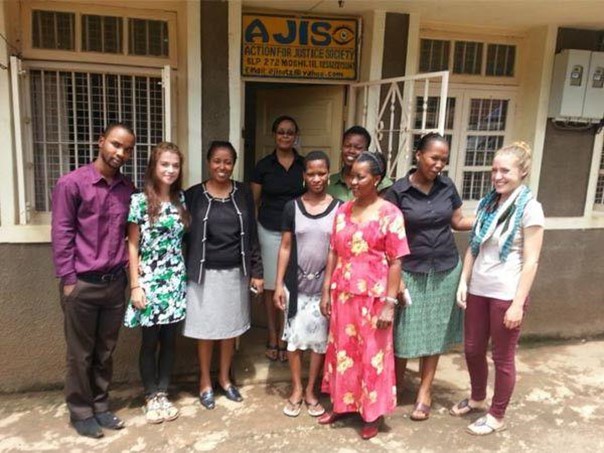
AJISO is a legal aid provision organization that was established in 1998 with the aim of promoting women and children rights and access to justice in society. It empowers women and children through access to justice, organizing public awareness raising meetings about human rights, legal education and Gender-based Violence (GBV). It also trains paralegals, the ward protection committees and child rights clubs to eliminate all forms of violence in society.

After realizing that poverty is a leading cause of GBV, AJISO embarked on empowering women economically by mobilizing them into Village Community Banks (VICOBA) groups where they receive entrepreneurship trainings and other demand driven skills which in turn allows them to engage in economic activities and improve their livelihood hence reducing the risk of being subjected to GBV.

Every year AJISO together with the paralegals serve more than 500 clients and reaches out to more than 93,659 people (43,808 male and 49,851 female) in Kilimanjaro and neighboring regions with legal and GBV education.

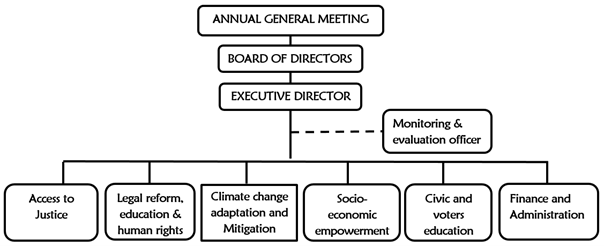
Organization structure of AJISO
Ajiso association in Tanzania
Source: Ajiso

Organization structure of AJISO
Organization structure
Source: Ajiso

My role

My role within the organization was to help underprivileged women and disadvantaged minorities in Tanzania to get out of poverty and empower them. I was also in charge of finding new solutions to resolve problems and limits they are facing in their daily life and VICOBA groups.

My personal missions

The main mission was to promote human rights, access to justice and socio-economic empowerment of women and children in Tanzania :

My first mission was to work on VICOBA which is the main solution use by AJISO to help low-income and poor people to get out of the poverty by using micro funding. The solution of VICOBA groups to help people to build their own business. This solution is great and successful but has limits, so I found solution to these limits.

My second mission was to help communities, especially women that wish to join these groups but are unable to afford shares due to their extreme poverty situations. You need 10.000 Shilling to enter in these groups which represent around 3 euros.

My third mission was to work on the problem of wood in households. Indeed, most of the households have a traditional oven which uses a lot of wood. Women spend a lot of time in the wood to find firewood and during this time they are losing customers and money. Because of this they are enabled to buy shares in VICOBA group.

In addition to my missions, I have been working on the preparation of a training guide on VICOBA groups for a better understanding of the system for members and interested people.

Required skills needed

To work for AJISO you need minimum a bachelor’s in economics. The skills and knowledge needed are basics in finance, background in law, social work, gender issues, media or other relevant fields.

The language requirement is English C1.

You need to be flexible and have a strong adaptability to other culture as you will face “different” ways of work, “different” times of work, “different” ways of communication, and different planning and organization. You need also to be altruist to live together. It means a “different” way of managing projects and “different” expectations about the results of the projects. You should be capable to cope with these differences.

You need to send a contribution of 450€ to participate to the program.

Concepts

Village Community Bank (VICOBA)

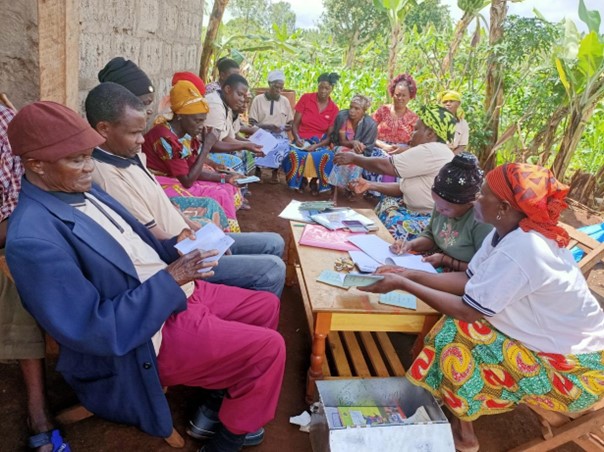
VICOBA (Village Community Bank) is a savings and loan fund for members who have joined together and formed a group for economic improved purposes. The system started in Tanzania twenty years ago and has shown great success for its members to be able to lend to each other, help each other in various problems as well set up joint economic projects.

The micro funding provided by VICOBA involves banking transactions and group deposits using a share system. Shares are funds that are invested by a group member in the group for the purpose of making profit and becoming the owner of the group. A group member can buy one or more shares. The value of one share will be based on the agreement of the members of the group and it is recommended that the rate take into account the economic potential of its members. So, this feature requires group members to buy shares for each one by loudly stating the number of shares they are buying and the amount of social fund they are investing.

The VICOBA system is like any other financial system that requires a lot of attention in managing its records and assets. The VICOBA system encourages records to be stored in categories (shares and loans) and this is to simplify and be sure when one of the records is read differently or when it causes controversy. In the VICOBA system, records are recorded in the member’s book, group ledger.

With the help of the Economic Empowerment program of AJISO, at least 900 (756 female and 144 male) people including people living with disabilities 34 (18 male and 16 Female) were empowered with knowledge of VICOBA and entrepreneurship which in turn has enabled them to start and expand their businesses to improve their livelihood.

Economic benefits from VICOBA Bank

VICOBA has a lot of economic benefits compare to a normal bank. VICOBA members can benefit from borrowing’ procedures without collateral. The low interest rates are decided by the group members and it is charge between 5 to 10%. At the end of each cycle, shareholders received a return on investment. So, you can win money by simply injecting money into the fund (buying shares).

The poor and low-income household have access to a wide range of financial services such as deposit, loans, payment services, money transfers and insurance products.
All these benefits permit to low-income household to be able to invest in their small businesses and increase their income. VICOBA bank is simple with transparent transactions, It is a safe economic and a good way to secure group members’ market.

Weekly meeting of a VICOBA group
Meeting Vicoba
Source: Vicoba

My takeaway

Working for AJISO was a great experience both on a professional and personal level.

During this internship I understood that the success of an organization is based on the projects that propose long-term solutions to the problems of development and poverty. It was very beneficial to me and made me understand the importance of our involvement in a responsible cooperation generating a human development which will allow the village population that wish develop their business to set up autonomous actions to reach precise objectives. I believe that we can reduce poverty with the implementation of community development, social justice and various forms of emergency interventions.

For the personal aspect, I have acquired a greater sensitivity and knowledge of global inequalities. I understand the importance of helping each other to make things evolve. I learned to be humble because we are so lucky to live in such conditions in France and I am thankful.

Why should I be interested in this post?

If you are interesting to work for a NGO or helping low income people to going out of the poverty through micro funding this post is for you. In this post, I explain my experience as a business developer withing the association AJISO headquarter in Tanzania. And how an almost entirely female association has succeeded in lifted a large part of the population out of poverty.

Related posts on the SimTrade blog

   ▶ All posts about Professional experiences

   ▶ Louise PIZON Vicoba

Useful resources

AJISO

About the author

The article was written in August 2022 by Louise PIZON (ESSEC Business School, Master in Strategy & Management of International Business (SMIB), 2020-2022).

My experience as an M&A Analyst Intern at Oaklins Atlas Capital

My experience as an M&A Analyst Intern at Oaklins Atlas Capital

Basma ISSADIK

In this article, Basma ISSADIK (ESSEC Business School, Global Bachelor of Business Administration, 2019-2023) shares her experience as an M&A Analyst intern at Oaklins Atlas Capital.

In May-June 2021, I was able to intern at Oaklins Atlas Capital, which is the Moroccan branch of Oaklins, a leader of M&A advising in mid-market operations. Oaklins group has advisory teams in 45 countries around the world. The Oaklins team provides mergers and acquisitions, growth equity and equity capital markets, debt advisory and corporate finance advisory services.

Oaklins Atlas Capital

Founded in 1999, Atlas Capital is an independent investment bank in Morocco covering all businesses: investment banking, asset management, stock market intermediation and private management. Offering a range of financial services with high added value, it targets a diversified clientele, whether companies and public offices, financial institutions, private companies or individual investors. It then was included in the Oaklins group and network which has presence across the globe through its 45 teams from Stockholm to Shanghai, from New York to São Paulo. The bank benefits from cross-border collaboration which helps the teams find the best suitable deals for its clients with a track record of more than 1900 deals being closed in the past five years.

Logo Oaklins Atlas Capital
Oaklins Atlas Capital
Source: Oaklins Atlas Capital.

My internship at Oaklins Atlas Capital

During May-June 2021, I worked as an M&A Analyst intern at Oaklins Atlas Capital. During my time at the bank, my main responsibilities were writing fact sheets about new clients (through communication with the Oaklins Network) and target companies / projects in Morocco. I was also responsible for drafting presentations (teaser, pitch, kick off meetings), for valuations (DCF, transactions) of the target companies once our clients confirmed their interest with it, and for assisting senior management in day-to-day tasks in relation to the transactions.

This experience was my very first in investment banking and it helped me understand the M&A process and how important negotiation and customer relationships were to this field. This internship introduced me to the very basics of Mergers and Acquisitions through a high-level of personal attention and monitoring as I was in a team of five in total including two partners and three interns. I had the opportunity to learn directly from professionals who have been in the field for 20+ years. Moreover, through this internship, I have been exposed to many industries: textile, technology, agriculture, food processing industry, electrical equipment, infrastructure, renewable energy and to clients from all over the world.

Skills needed

  • Strong interpersonal skills
  • Financial analysis skills
  • Customer service (if you are to interact with clients)
  • To be familiar with finance and be able to analysis financial data
  • To be familiar with digital tools such as pptx and excel

What I have learnt from the internship

This internship has helped me learn so much about cross-border operations and how to approach potential acquirers with target companies and discuss the acquisition with them. It has also enabled me to have a solid understanding of many industries as I was in charge of sectoral research.

Key concepts related to my work

Mergers and acquisitions

Why do companies merge with and acquire other companies? Mergers and acquisitions are the act of consolidating companies or assets with an eye toward stimulating growth (it can expand a company’s market shares without it having to do significant heavy lifting), gaining competitive advantages (maybe eliminating competition and gaining market share), increasing market share, or influencing supply chains (eliminating a tier of costs).

A merger describes two companies uniting into a single company, where one of the two companies ceases to exist after being absorbed by the other company. The boards of directors of both companies must first secure approval from their respective shareholder bases. In 2006, Disney and Pixar completed a successful merger.

An acquisition occurs when one company (the acquirer) obtains a majority stake in the target firm, which incidentally retains its name and legal structure. For example, after Amazon acquired Whole Foods in 2017, the latter company maintained its name and continued executing its business model, as usual.

Tender Offer

A tender offer is a bid to purchase some or all of shareholders’ stock in a corporation. Tender offers are typically made publicly and invite shareholders to sell their shares for a specified price and within a particular window of time.

The price offered is usually at a premium to the market price and is often contingent upon a minimum or a maximum number of shares sold. To tender is to invite bids for a project or accept a formal offer such as a takeover bid. An exchange offer is a specialized type of tender offer in which securities or other non-cash alternatives are offered in exchange for shares. For example, Elon Musk has recently announced making a tender offer to acquire Twitter.

Proxy fight

A proxy fight refers to the act of a group of shareholders joining forces and attempting to gather enough shareholder proxy votes to win a corporate vote. Sometimes referred to as a “proxy battle,” this action is mainly used in corporate takeovers. For example, Microsoft Corporation made an unsolicited offer to buy Yahoo for $31 per share. The board of directors at Yahoo believed the offer by Microsoft under-valued the company, and, consequently, the board stalled any negotiations between Microsoft and Yahoo executives.

Why should I be interested in this post

This post is interesting for everyone who would like to work in investment banking and who would like to kick start their career by doing a summer internship.

Useful resources

Oaklins Atlas Capital

Related posts on the SimTrade blog

   ▶ All posts about Professional experiences

   ▶ Basma ISSADIK My experience as an M&A/TS intern at Deloitte

   ▶ Anna BARBERO Career in finance

   ▶ Alexandre VERLET Classic brain teasers from real-life interviews

About the author

The article was written in August 2022 by Basma ISSADIK (ESSEC Business School, Global Bachelor of Business Administration, 2019-2023).

My experience as an M&A/TS intern at Deloitte

Basma ISSADIK

In this article, Basma ISSADIK (ESSEC Business School, Global Bachelor of Business Administration, 2019-2023) shares her experience as an M&A/TS (Mergers and Acquisitions / Transaction Services) Intern at Deloitte.

Summer 2021, I was able to intern at Deloitte Casablanca for a couple of months. I was in the Transaction Services team which was in charge of advisory in deal and IPO readiness, target screening, sell-side and buy-side due diligence, transaction accounting and reporting, and business integration or separation. Transaction services typically refers to the services provided when a business transaction takes place. An example of a business transaction would be a merger or acquisition of a company.

Deloitte

Founded in 1845, Deloitte is one of the biggest professional service providers in the world. Being one of the “Big Four” accounting firms, it provides services in audit and assurance, consulting, financial advisory, risk advisory, tax and legal advisory. Deloitte was founded by William Welch Deloitte in London in 1845 and expanded into the United States in 1890. It merged with Haskins & Sells to form Deloitte Haskins & Sells in 1972 and with Touche Ross in the US to form Deloitte & Touche in 1989. As of 2020, Deloitte is the third-largest privately-owned company in the United States, according to Forbes. The firm has sponsored a number of activities and events including the 2012 Summer Olympics.

Logo Deloitte.
Logo Deloitte
Source: Deloitte.

My internship at Deloitte

When I arrived at Deloitte in July 2021, the team was working on a specific project in cooperation with the Minister of the Industry. I was in charge of analyzing the eligibility of our clients to obtain financing from the Minister of the Industry. We already had set criteria for the companies that would later be presented to the Minister of the Industry. Our mission was to select the interesting project in accordance with the “banque de projet” which had already been established and advise the companies to meet the criteria as best as they can. These criteria were of different natures:

  • In financing for instance, there should be a portion of the project financed by the shareholders / founders.
  • The forecasted financial figures should be realistic.
  • The business plan should fit within the criteria and so on…

The junior analysts made sure I was closely supervised and assisted whenever I needed help with anything. I was communicating with them on a daily basis, and they all ensured I had a great experience at Deloitte which is what differentiates the firm from other competitive professional services companies. From the start I was given a lot of responsibilities which I was very happy about. I was able to participate in meetings and had the opportunity to lead one at the end of my internship. It was a really good experience in a way that enabled me to have direct contact with professionals and feel very useful to the team as well.

Skills needed

  • To have some experience in accounting
  • To be able to communicate and interact with the team
  • To possess analytical skills and problem-solving skills
  • To be familiar with financial reporting
  • To be familiar with digital tools such as pptx and excel
  • To have a strong learning ability
  • Be able to take responsibilities early on

What I have learnt from the internship

This internship has taught me a lot on the importance of meticulousness and how vital it is to be very rigorous with the data we are given and the analysis we do of it. I have also learned lots about the role of an auditing and consulting firm in advising clients to make the best decisions for their companies.

Key concepts related to my internship

Due diligence

Due diligence is an investigation, audit, or review performed to confirm facts or details of a matter under consideration. In the financial world, due diligence requires an examination of financial records before entering a proposed transaction with another party. Due diligence (DD) is an extensive process undertaken by an acquiring firm in order to thoroughly and completely assess the target company’s business, assets, capabilities, and financial performance. There may be as many as 20 or more angles of due diligence analysis.

The main types of due diligence inquiry are as follows:

  • Administrative DD: Is the aspect of due diligence that involves verifying admin-related items such as facilities, occupancy rate, number of workstations, etc.
  • Financial DD: Financial DD aims to provide a thorough understanding of all the company’s financials, including, but not restricted to, audited financial statements for the last three years, recent unaudited financial statements with comparable statements of the last year, the company’s projections and the basis of such projections, capital expenditure plan, schedule of inventory, debtors and creditors, etc.
  • Legal DD
  • Asset DD
  • Human Resources DD
  • Environmental DD
  • Taxes DD : Due diligence in regard to tax liability includes a review of all taxes the company is required to pay and ensuring their proper calculation with no intention of under-reporting of taxes.
  • Intellectual Property DD: Almost every company has intellectual property assets that they can use to monetize their business. These intangible assets are something that differentiates their products and services from their competitors.
  • Customer DD
  • Strategic Fit: Acquirers are generally also very careful about exercising due diligence in regard to evaluating how well the target company fits in with the overall strategic business plan of the buyer.

Why should I be interested in this post

You should be interested in this post if you are interested in working in finance in general because it might help you understand if you would like to work in the field or not, and maybe help you refine your professional project.

Related posts on the SimTrade blog

All posts about Professional experiences

▶ Basma ISSADIK My experience as an M&A Analyst Intern at Oaklins Atlas Capital

▶ Anna BARBERO Career in finance

▶ Alexandre VERLET Classic brain teasers from real-life interviews

Useful resources

Deloitte

About the author

The article was written in August 2022 by Basma ISSADIK (ESSEC Business School, Global Bachelor in Business Administration, 2019-2023).

My experience as a sell-side equity research analyst

My experience as a sell-side equity research analyst

Tanmay DAGA

In this article, Tanmay DAGA (ESSEC Business School, Global Bachelor of Business Administration, 2017-2021) introduces equity research, shares his internship experience at a top sell-side equity research company named Kotak Securities and gives his opinions on what the future holds for the industry.

About Kotak Securities

Kotak Securities was founded in 1994 as a subsidiary of Kotak Mahindra Bank and is headquartered in Mumbai, India. It is headed by Mr. Jaideep Hansraj who is a leading figure and has over 20 years of experience in the equity research industry. The company has over 1.7 million customer accounts and handles over 800,000 trades every single day making it one of the biggest brokerage houses in the country. The company handles operations in over 394 cities in India and is well poised for further expansion helping it expand its customer base. Kotak Securities offers stock broker services, portfolio management services, depository services, research expertise, dynamic market data and international reach for clients looking for investment opportunities overseas.

Kotak Securities

What is equity research?

It is a mainstream finance position which entails fundamental analysis and subsequent recommendation of public securities. Fundamental analysis is a method of evaluating the intrinsic value of an asset (future cash flows discounted to the present) and analyzing the factors that could influence its price in the future. Hence, equity research is an investigation based upon the core business drivers of a particular business which are reflected in its financial statements. Hence, equity researchers use financial statements combined with other industry and macroeconomic reports to form their opinion about a certain company or a universe of companies (also called coverage list). Investors such as money/managers use this information to better investigate their potential or existing investment decisions. To conclude, the main purpose of equity research is to provide investors with detailed financial analysis and recommendations on whether to buy, hold, or sell a particular stock. The professionals working in brokerage firms which sell analysis reports to investors are called sell-side analysts. Professionals working for mutual funds or hedge funds and who make direct investment decisions are called buy-side analysts.

Read an interesting interview with an industry expert who shares his experience of working in the industry.

Me and Finance

I had gotten enrolled in ESSEC’s GBBA in 2017 owing to my curiosity in finance and the university’s premier status, especially in finance. At the end of the first year, I had the opportunity to apply my mind and practically learn a few things along with it. It had always been my mission to work in finance, particularly in valuation. My fascination with valuation is simple – you are allowed to deem the situation as you see fit provided you have a logical reasoning behind it. Nothing can narrow the scope of your thoughts as long as they are realistic and reasonable. It is a great way for individuals to look at things from a broader perspective and develop an analytical mindset to help comprehend several moving parts simultaneously. It does take time getting used to the idea of having to dig into minute details but it’s worth it! Valuation is not purely science per se. It is a blend between sound analytical reasoning that helps you come up with a story (forecast as experts call it) and simple objective mathematics to help validate your story’s credibility. The fact that valuation today in investment banking and other fields looks so complicated is partly to mask the simplicity involved in the process so big banks can continue to charge hefty fees for what they do. Moreover, it is not a skill that will ever go in vain. The mindset a sound valuer develops helps him/her analyze the pros and cons any situation better than a counterpart. It is a skill that I recommend everyone to acquire.

My internship in Kotak Securities

In 2018, at the end of my first year of my GBBA at ESSEC Business School, I did an internship at Kotak Securities equity research division in Mumbai, India. I was 18 years old and comparatively new to equity research. Resulting, I witnessed a steep learning curve requiring me to learn and apply several concepts in a short span of time. My main responsibility was to help the fundamental research team carry out due diligence (financial analysis to analyse the true or intrinsic value of an asset and all other factors affecting this value) for the companies under our coverage universe. This was done by performing rigorous research for the company’s business, its supply chain, its value drivers and all other factors that affect its value and ultimately its stock price. The conclusions were to be presented to the senior management and the sales team along with a thorough explanation behind the rationale of selecting a particular stock for client recommendation. Based on the findings, recommendations were to be published in a bi-monthly analysis report which also included other important topics like the economic analysis of the current situation and trends in the currencies traded in foreign exchange (FX) market. As the organization was agile and flexible with what responsibilities members could take, I had the opportunity of working with several other departments aside from fundamental research. Some of the other projects I worked on were developing a proprietary algorithm based on analysis of trading patterns for index companies alongside the technical analysis team (which is the motivation for me in selecting the SimTrade course) and a model project on sentiment analysis – how news and company perception (especially on Twitter) affect the stock price in the short run. I learnt several hard skills such as modelling in Excel, literacy in reading company’s financial statements and intermediate level of coding in Python. Overall, it was a great work experience for me.

Key takeaways from my internship

During my time at Kotak, I have come across some important financial concepts that I believe every individual, irrespective of their affiliation with the finance industry, must truly understand. They will help you better understand financial issues and make sound investment decisions.

Inflation

Inflation refers to the sustained increase in the price of goods and services in an economy. This increase in price is hard to pinpoint at any one factor but more often than not, it is a combination of various factors. This could range from increase in labor prices to jump in raw material costs. As prices rise due to inflation, you’ll be able to afford less and less over a given period of time. That’s why it is imperative to understand that long-term savings must be invested in a manner by which the returns surpass the inflation rate. That’s the only way one can continue to afford to buy more in a definite time period in the future. In many countries, the only reliable way to beat inflation is investing in stocks/equities. As Bonds or Bank savings do not offer any positive real interest realization.

Diversification

Diversification is a risk management strategy that mixes a wide variety of investments within a portfolio. A diversified portfolio contains a mix of distinct asset types and investment vehicles in an attempt at limiting exposure to any single asset or risk. The rationale behind this technique is that a portfolio constructed of different kinds of assets will, on average, yield higher long-term returns and lower the risk of any individual holding or security. This is a widely approved method for protecting capital against unexpected events in the global markets. By using the primary study of correlation, investors can diversify certain risk away. However, data on correlation is historical and thus, backwards looking, and might not always hold true in the future. For instance, during the shutdown of the global economy in March 2020, multiple assets like stocks, commodities and bitcoin (which have not been positively correlated in the past) collapsed together. All have had a positive recovery together since (again implying positive correlation as opposed to results from previous studies).

Time Value of Money

The time value of money (TVM) is the concept that money you have now is worth more than the identical sum in the future due to its potential earning capacity. This core principle of finance holds that provided money can earn interest, any amount of money is worth more the sooner it is received. For instance, assume a sum of $10,000 is invested for one year at 10% interest. The future value (FV) of that money is: FV = $10,000 x (1 + 10%) = $11,000. The formula can also be rearranged (reversed) to find the value of the future sum in present day dollars. For example, the present value (PV) of $5,000 one year from today, compounded at 7% interest, is: PV = $5,000 / (1 + 7% ) = $4,673.

TVM is also sometimes referred to as present discounted value. This is a fundamental pillar on which company valuation is based. The true value of a company is the future free cash flows the company generates, discounted to the present time using an appropriate discount factor.

Future of equity research: my personal view

Equity research is an important role that has come into prominence since the bull market in the 1950s. Thousands of fund managers handling trillions of dollars in assets under management often use sell-side research to get an outsider’s opinion before making investment decisions. Certainly, the size of the industry has shrunk significantly since buy-side and IB analysts are being better compensated, causing a shift in the workforce. However, things are not bad. Companies are now letting analysts focus more on analysis than on sales. This is certainly going to attract new talents who want to focus purely on analysis.

Read this interesting counter-view on the future of the industry.

Relevance to SimTrade

This course helps in understanding the other side of the same coin – technical analysis (using price movements and other factors to predict the future of a security). Participants of this course can expect to gain practical knowledge about stock trading by using a real-world like simulator where multiple strategies can be applied and tested. Other benefits include gaining a broad understanding of the financial markets and concepts.

Related posts on the SimTrade blog

   ▶ All posts about Professional experiences

   ▶ Louis DETALLE My experience as a Transaction Services intern at EY

   ▶ Aastha DAS My experience as an investment banking analyst at G2 Capital Advisors

   ▶ Basma ISSADIK My experience as an M&A/TS intern at Deloitte

Useful resources

Kotak Securities

Corporate Finance Institute Example of equity research report

About the author

The article was written by Tanmay DAGA (ESSEC Business School, Global Bachelor of Business Administration, 2017-2021).

My experience as a portfolio manager in a central bank

My experience as a portfolio manager in a central bank

During my studies at ESSEC Business School, I had the chance to attend the SimTrade course. This course helped me to secure an internship as a risk manager at Bank Al-Maghrib (the central bank of Morocco) as I was asked during my interviews technical questions about financial markets that were covered during the course.

Youssef_Louraoui

In this article, Youssef LOURAOUI (ESSEC Business School, Global Bachelor of Business Administration, 2020) shares his experience as an intern in the risk management department (middle office) at the Central Bank of Morocco (Bank Al-Maghrib) in 2020.

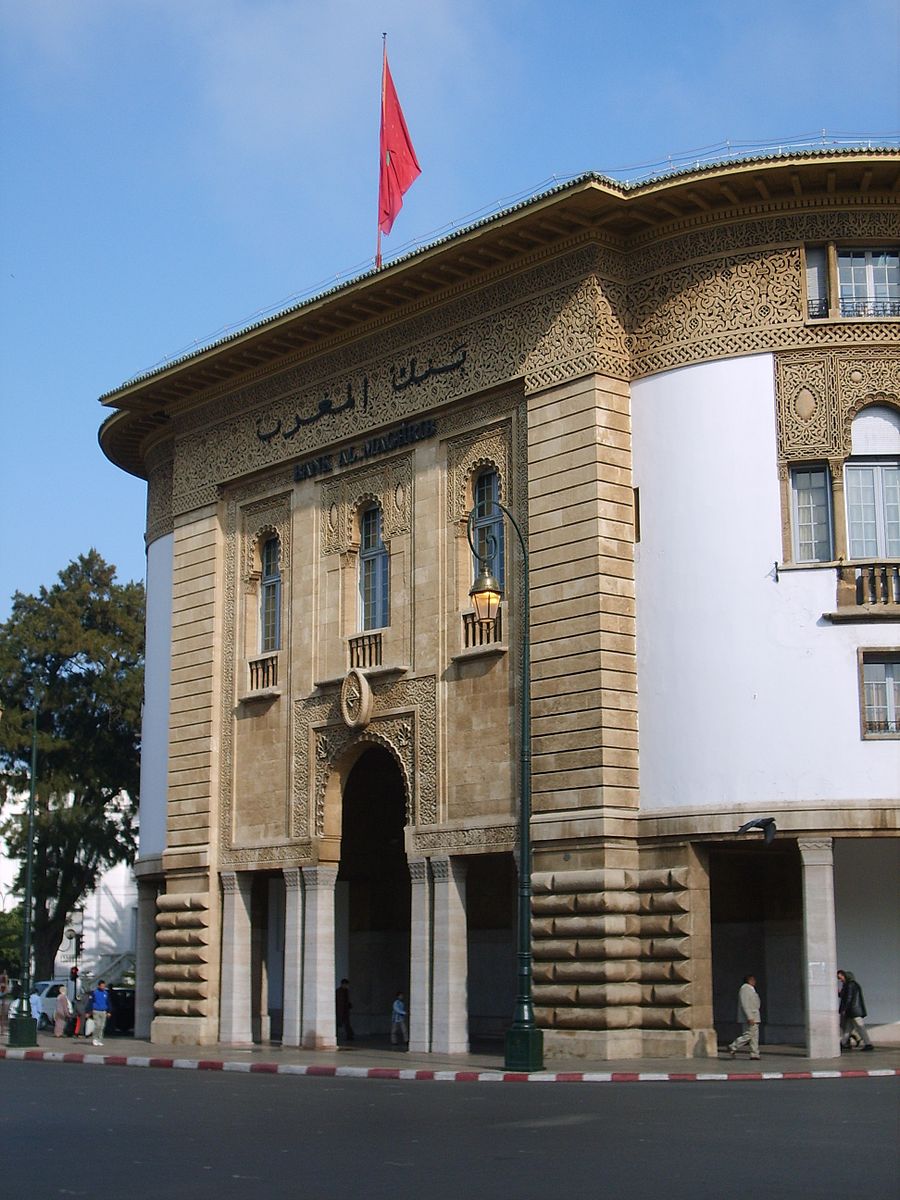
Bank Al-Maghrib

The central bank of Morocco was founded in 1959 after Morocco proclaimed its independence. It is a 100% state-owned bank that regulates the markets and the economy by implementing monetary and economic policies to ensure the welfare in terms of the parity of prices and the control of inflation. Inflation is a major economic indicator that possesses strategic importance and is part of the major focus for the central bank.

Bank Al-Maghrib

I describe below my experience at Bank Al-Maghrib.

My internship at Bank Al-Maghrib

I was affected at the middle office department, which is in charge of measuring risk exposures and profits and losses on the positions taken by the bank on an investment portfolio of 27,4 billion euros of foreign reserve. One of the key risk exposure metrics is volatility measured by the standard deviation statistically defined as the dispersion of a random variable (asset prices or returns in my case) from its expected value. The standard deviation indicates how much the current return is deviating from its expected historical returns. It is one of the most widely used metrics for investors when analyzing the risk of an investment. Among other key exposures metric, there is what it is called the VaR (Value at Risk) at 99% and a 95% confidence level for 1-day and 30-day positions. In other words, the VaR is a metric used to compute how much loss can the portfolio incur at a % degree of confidence for a given time horizon.

Every day, the Head of the Middle Office organizes a general meeting where he talks about global debriefing of the main financial news that happened overnight and debriefing the middle office desk for the “watch out” assets that could have a potential investment opportunity. Accordingly, the team has also the task of staying in line with the investment decision that characterizes the organization, as it does not operate as an investment banking corporation nor a hedge fund in the risk and leverage used. As the central bank has the special task of keeping safe the national reserve and searching for a good mix to invest in a low risk asset (AAA bonds from European countries coupled with American treasury bonds).

My task aimed to get a hand on the investment mechanism in the middle office of the bank. The investment mechanism consists of the division of the overall portfolio into three main tranches where each one has its characteristics. The first tranche (called also the security tranche) is calculated by analyzing the national need for a currency that needs to be kept safe to establish welfare on the exchange market (based mainly on short term position in low-risk profile asset (Liquid and high rated bonds). The second tranche is based on buy and hold and a market strategy. The first one consists of taking a long position on more risky assets than the first tranche till maturity, there is no selling during the lifetime of the asset (riskier bonds and gold). The second strategy is based on buying and selling liquid assets for an expectation of yielding higher returns.

During my time at the middle office desk, I’ve managed to develop a tool to represent the investment mechanism used for asset allocation. The tool, developed in an Excel spreadsheet, is an intuitive and simplified model that enables the understanding of the investment mechanism. Indeed, it is capable of continuously refreshing the data by importing the most recent quotations (from data providers like Bloomberg or Reuters as the two main financial data providers) to allow for an update of the different exposures and thus allow to respect the proportions of portfolio allocations. It has also a dynamic risk management tool to effectively compute draw-downs (a peak-to-trough decline during a specific period for an investment) and stressed conditions, as I experienced how the markets reacted to the novel Covid-19 pandemic with one of the most historic market movements in a long time.

Some of the key learning outcomes:

  • The introduction to data analysis by manipulating large datasets
  • Portfolio optimization based on the Markowitz efficient frontier
  • Dynamic portfolio allocation based on the fundamentals of the modern portfolio theory
  • The theory of efficient markets to understand how the markets evolve and move in a different direction as a reaction to events.

Front office, middle office and back office

My internship was also a good opportunity to discover the different departments of the bank: the front office, the middle office, and the back office:

  • The front office directly deals with the individual or corporate clients of the bank. Salespeople propose adequate products and solutions to the clients (they are in front of them!). Traders intervene in the financial markets on behalf of the clients or for the bank itself (proprietary trading). To answer the demand of clients, financial engineers and quants also develop new products and the associated mathematical models to price them. One of the main trends that are emerging in the front office is the automatization with the help of AI and algorithmic trading that is taken some room in the trading desks. At this time the bank didn’t implement any technology based on high-frequency trading, but it is taking the financial industry by surprise and it goes a long way back, nearly decades ago since the first usage of algorithmic trading.
  • The middle office situated between the front office and the back office (somewhere in the middle!) deals with the risk management of the bank. Risk managers control the traders’ positions (respect of constraints such as value-at-risk limits and stress tests) and compute the profits and losses (P&L) on traders’ positions daily.
  • The back-office deals with the conformity and the security check of every trade to ensure a proper settlement.

Note that the frontiers between the front, middle, and back-office may change from one bank to another. And last but not the least, the IT people are also supporting all three departments to make the whole system work. In other words, they are in charge of the maintenance of the technical infrastructure that the bank uses daily to operate fluently, as all the departments are dependent on internal software to intermediate and operate in the market or to communicate between each department of the bank or with another organization. The IT desk has great importance in offering a flawless experience for the employees when using the internal electronic infrastructure. There is the backbone of the bank skeleton.

All in all, the SimTrade module served me well as I managed to gain quickly the necessary knowledge and bridge the gap that I had to be in the best position to achieve the missions I’ve been affected. I especially used the content of Period 2 of the SimTrade certificate, which deals with market information. The concepts of trading and investing were also obviously useful for the development of my portfolio management tools.

Related posts on the SimTrade blog

   ▶ All posts about Professional experiences

   ▶ Akshit GUPTA Portfolio manager – Job description

   ▶ William ARRATA My experiences as Fixed Income portfolio manager then Asset Liability Manager at Banque de France

   ▶ Alexandre VERLET Classic brain teasers from real-life interviews

   ▶ Jayati WALIA Capital Asset Pricing Model (CAPM)

   ▶ Youssef LOURAOUI Markowitz Modern Portfolio Theory

Useful resources

Bank of Morocco

About the author

The article was written in November 2020 by Youssef LOURAOUI (ESSEC Business School, Global Bachelor of Business Administration, 2020).