

Understanding Snowball Products: Payoff Structure, Risks, and Market Behavior

Tianyi WANG

In this article, Tianyi WANG (ESSEC Business School, Global Bachelor in Business Administration (GBBA), 2022-2026) explains the structure, payoff, and risks of Snowball products — one of the most popular and complex structured products in Asian financial markets.

Introduction

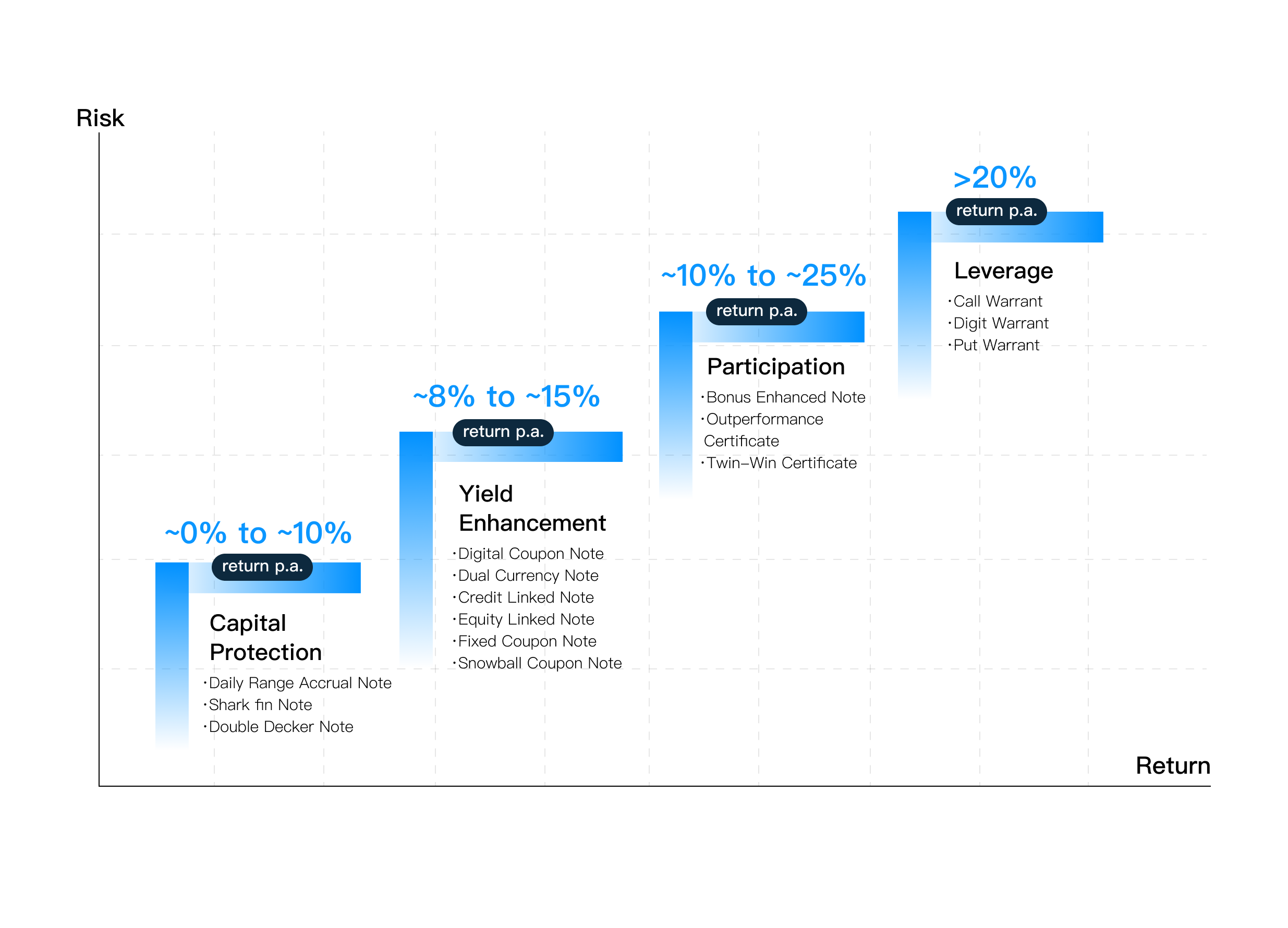
Structured products can be positioned along a broad risk–return spectrum.

Snowball Structure Product .
Snowball Structure Product
Source: public market data.

As shown in the figure below, Snowball Notes belong to the category of yield-enhancement products, typically offering annualized returns of around 8% to 15%. These products sit between capital-protected structures—which provide lower but more stable returns—and high-risk leveraged instruments such as warrants. This placement highlights a key feature of Snowballs: while they provide attractive coupons under normal market conditions, they come with conditional downside risk once the knock-in barrier is breached. Understanding this relative positioning helps explain why Snowballs are widely marketed during stable or range-bound markets but may expose investors to significant losses when volatility spikes.

Snowball options have become widely traded structured products in Asian equity markets, especially in China, Korea, and Hong Kong. They appeal to investors seeking stable returns in range-bound markets. However, their path-dependent nature and embedded option risks make them highly sensitive to market volatility. During periods of rapid market decline, many Snowball products experience “knock-in” events or even large losses.

To be more specific, a knock-in event occurs when the underlying asset’s price falls below (or rises above, depending on the product design) a predetermined barrier level during the life of the product. Once this barrier is breached, the Snowball option “activates” the embedded option exposure—typically converting what was originally a principal-protected or coupon-paying structure into one that behaves like a short option position. As a result, the investor becomes directly exposed to downside risks of the underlying asset, often leading to significant mark-to-market losses.

This article explains how Snowball products work, their payoff structure, the embedded risks, and how market behavior affects investor outcomes.

Who buys Snowball products?

Snowball products are purchased mainly by:

  • Retail investors — especially in mainland China and Korea, attracted by high coupons and the perception of stability.
  • High-net-worth individuals (HNWI) — through private banking channels.
  • Institutional investors — such as securities firms and structured product funds, often using Snowballs for yield enhancement.

Because Snowballs involve complex embedded options, they are considered unsuitable for inexperienced retail investors. Nevertheless, retail participation has grown significantly in Asian markets.

What is a Snowball product?

A Snowball is a structured product linked to an equity index (e.g., CSI 500, HSCEI) or a single stock. It provides a fixed coupon if the underlying asset stays within certain price barriers. The product contains three key components:

  • Autocall (Knock-out) — product terminates early at a profit if the underlying rises above a set level.
  • Knock-in — if the underlying falls below a certain barrier, the investor becomes exposed to downside risk.
  • Coupon payment — paid periodically as long as knock-in does not occur and knock-out does not trigger.

Snowballs earn steady income in stable markets, but losses can become severe when markets experience sharp declines.

The name “Snowball” comes from the idea of a snowball rolling downhill: it grows larger over time. In structured products, the coupon accumulates (or “rolls”) as long as the product does not knock-in or knock-out. As the months go by, the investor receives a growing stream of accrued coupons — similar to a snowball becoming bigger. However, like a snowball that can suddenly break apart if it hits an obstacle, the product can suffer significant losses once the knock-in barrier is breached.

Market behavior: what does it mean?

In the context of Snowball pricing and risk, “market behavior” refers to two dimensions:

  • Financial market behavior (price dynamics) — movements of the underlying index or stock, volatility levels, liquidity conditions, and short-term shocks. This includes trends such as rallies, range-bound phases, or sharp sell-offs that affect knock-in and knock-out probabilities.
  • Investor behavior — how different market participants react: hedging flows from issuers, panic selling during downturns, retail speculation, institutional risk reduction, and shifts in investor sentiment. These behaviors can reinforce price moves and alter Snowball risk.

Together, these elements form “market behavior”: the interaction between market movements and investor actions. For Snowballs, this directly affects whether the product pays coupons, knocks out early, or falls into knock-in and creates losses.

Key barriers in Snowball products

Knock-out (Autocall) barrier

If at any observation date the price exceeds the knock-out barrier (e.g., 103%), the product terminates early and investors receive principal plus accumulated coupons.

Knock-in barrier

If the price falls below the knock-in barrier (e.g., 80%), the product enters a risk state. If at maturity the price remains below the strike, the investor bears the underlying’s loss.

How Snowball payoffs work

The payoff of a Snowball is path-dependent, meaning it depends on the entire trajectory of the underlying index, not just the final price at maturity.

There are three typical outcomes:

Knock-out outcome (early exit)

If the underlying exceeds the knock-out level early, the investor receives:
Principal + accumulated coupons

No knock-in, no knock-out (maturity coupon)

If the underlying never crosses either barrier:
Principal + full coupons

Knock-in triggered (risky outcome)

If knock-in occurs and the final price ends below strike:
The investor bears the underlying loss

Thus, Snowballs deliver strong returns in stable or mildly rising markets but carry significant losses in bear markets.

Why Snowball products are risky

Although marketed as “income products,” Snowballs are essentially short-volatility strategies. The issuer sells downside protection to the investor in exchange for coupons.

Key risks include:

  • High volatility increases knock-in probability
  • Sharp declines lead to principal losses
  • Liquidity risk
  • Complex payoff makes risks hard to evaluate for retail investors

Case study: Why many Snowballs were hit in 2022–2023

During 2022–2023, Chinese equity markets — especially the CSI 500 and CSI 1000 — experienced large drawdowns due to geopolitical tensions, policy uncertainty, and weak economic recovery. Volatility spiked, and mid-cap indices saw rapid declines.

As a result:

  • Many Snowballs hit knock-in levels
  • Investors faced large mark-to-market losses
  • Issuers reduced new Snowball supply due to elevated volatility

This period highlights how market sentiment and volatility regimes directly impact structured product outcomes.

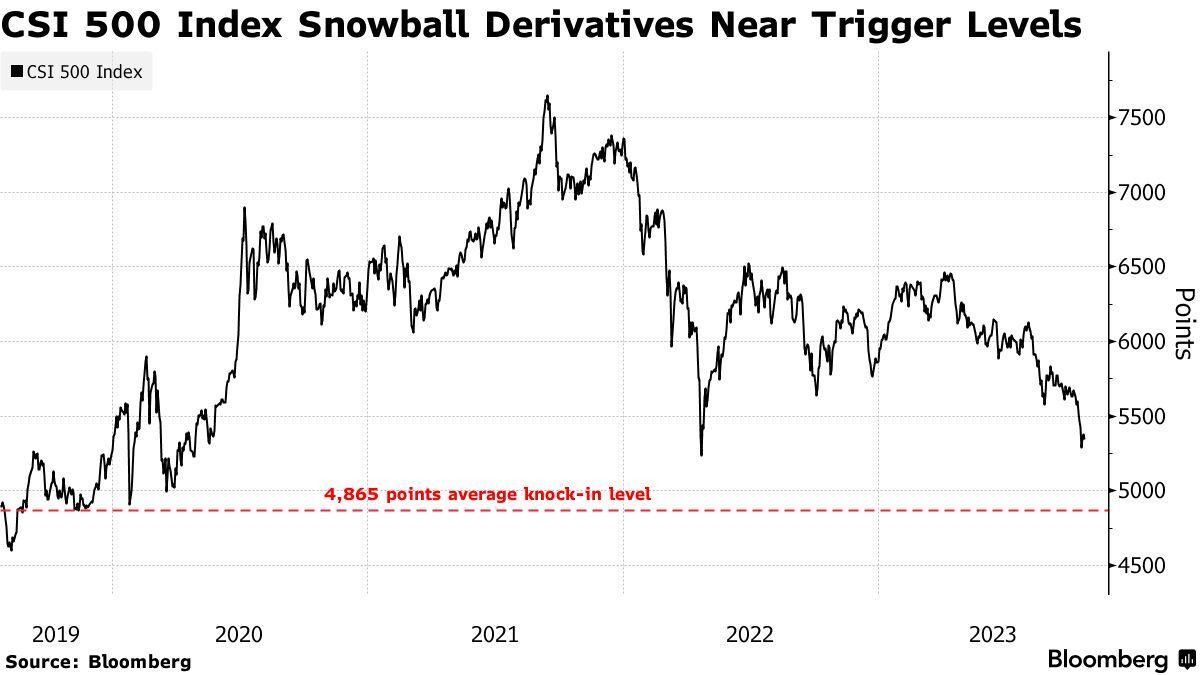
According to Bloomberg (January 2024), more than $13 billion worth of Chinese Snowball products were approaching knock-in triggers. A rapid decline in the CSI 1000 index pushed many products close to their 80% knock-in barrier.

Some investors experienced immediate 15–25% losses as the embedded short-put exposure was activated.

This real-world case demonstrates how quickly Snowball risk materializes when market volatility rises.

Snowball Take Out.
Snowball Take Out
Source: public market data.

How market behavior affects Snowball performance

Volatility

High volatility increases the likelihood of crossing both barriers.

Trend direction

  • Upward trends → more knock-outs
  • Range-bound markets → steady coupon income
  • Downward trends → knock-in risk and principal loss

Liquidity and investor flows

During sell-offs, Snowball hedging can amplify downward pressure, creating feedback loops.

Snowball knock-in chart.
Snowball knock-in chart
Source: public market data.

Explanation: The chart illustrates a steep market decline where the underlying index falls below its knock-in barrier. When such drawdowns occur rapidly, Snowball products transition into risk mode, immediately exposing investors to the underlying’s downside. This visualizes how market volatility and negative sentiment can activate the hidden risks in Snowball structures.

Conclusion

Snowball products are appealing due to their attractive coupons, but they involve significant downside risks during volatile markets. Understanding the path-dependent nature of their payoff, barrier mechanics, and market behavior is crucial for investors and product designers.

By analyzing Snowball structures, investors gain deeper insight into how derivative products are created, priced, and risk-managed in real financial markets.

Related posts on the SimTrade blog

   ▶ Shengyu ZHENG Barrier Options

   ▶ Slah BOUGHATTAS Book by Slah Boughattas: State of the Art in Structured Products

   ▶ Akshit GUPTA Equity Structured Products

About the author

The article was written in November 2025 by Tianyi WANG (ESSEC Business School, Global Bachelor in Business Administration (GBBA), 2022-2026).

My internship experience as an analyst assistant at China Bond Rating

Add Post

Tianyi WANG

In this article, Tianyi WANG (ESSEC Business School, Global Bachelor in Business Administration (GBBA), 2022-2026) shares her professional experience as an Analyst Assistant at China Bond Rating in Beijing.

About the company

China Bond Rating Co., Ltd. (CBR), established in 2010 with a registered capital of RMB 50 million, has grown into one of the core credit rating institutions in China’s fixed-income market. The company employs around 280 professionals and operates under an “investors-pay” model designed to enhance its independence and objectivity. Over the years, it has built a comprehensive analytical framework covering macroeconomic research, sectoral risk evaluation, credit modelling, structured finance, and green finance.

Logo of China Bond Rating .
Logo of China Bond Rating
Source: the company.

CBR provides a wide range of services including issuer credit ratings, bond and ABS credit assessments, credit-risk-based valuation models, market pricing services, and risk monitoring tools. Its clients span local governments, state-owned enterprises, financial institutions, corporates across industries, and institutional investors in the interbank bond market. According to regulatory disclosures, the company issued over 1,180 new credit ratings in a recent year, covering more than RMB 34 trillion in bond issuance. These credit opinions are widely used for investment decisions, regulatory compliance, and bond pricing, making the firm a key contributor to transparency and information efficiency in China’s fixed-income ecosystem.

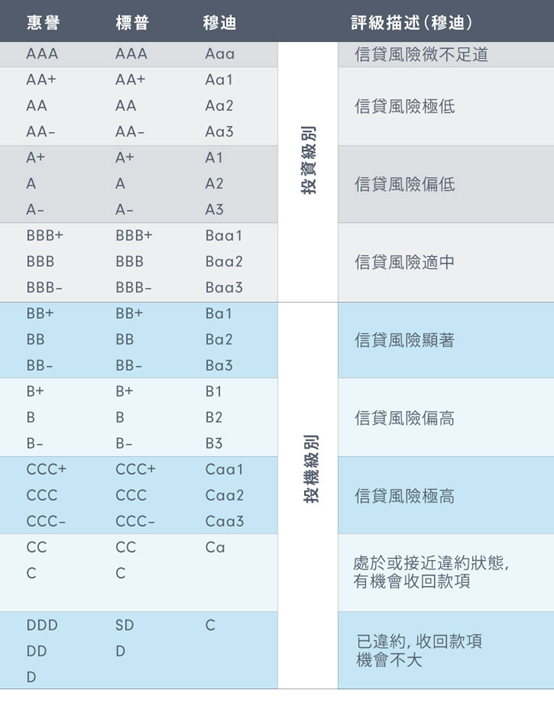
As part of its methodology, China Bond Rating uses a structured rating grid similar to international rating agencies, ranging from high-grade ratings (AAA, AA, A) to speculative-grade categories (BBB, BB, B, etc.). Credit ratings help investors assess default risk, determine appropriate yield spreads, and monitor changes in an issuer’s financial strength over time.

Grid of China Bond Rating.
 Grid of China Bond Rating
Source: the company.

My internship

From August to November 2023, I worked as an Analyst Assistant at the Investment Service Department. The experience allowed me to gain deep exposure to China’s local government financing system and understand how professional credit evaluations are produced from both data and policy perspectives.

My missions

My primary mission was to support the team in building and maintaining credit evaluation databases for local governments and urban investment enterprises. I conducted detailed research on more than 130 companies across the Sichuan and Chongqing regions, analyzing their business structures, investment pipelines, guarantee arrangements, and key financial items. I helped calculate funding gaps and conducted preliminary assessments of repayment risk.

I also created and updated database templates using Excel, SQL, and internal analytical tools to maintain credit evaluation data for local governments, urban investment enterprises, and bond issuance activities. This included compiling statistics on local government bonds and special refinancing bond issuances.

Another major part of my mission was to verify and cross-check corporate operational and financial data to support fundamental research. I helped review over 60 debt financing reports and credit analysis documents, ensuring accuracy and consistency across key metrics. Through this work, I learned how rating agencies ensure data reliability before forming credit opinions.

Required skills and knowledge

This internship required strong analytical thinking, attention to detail, and the ability to manage large volumes of financial data. Hard skills such as Excel modeling, SQL queries, statistical analysis, and familiarity with financial statements were essential. Equally important were soft skills such as communication, logical reasoning, and the ability to organize information from inconsistent disclosures.

Given the diversity of local government financing practices across regions, I needed to quickly understand differences in fiscal structures, reporting standards, and project pipelines. The role required not only technical ability but also a policy-oriented mindset to interpret the implications of debt levels, off-balance-sheet risks, and industry trends.

What I learned

Through the database reconstruction and indicator standardization work, I gained a systematic understanding of credit risk assessment and the financial mechanisms behind China’s local government financing vehicles (LGFVs). I developed the ability to assess repayment capacity based on funding gaps, cash flow projections, and guarantee relationships.

My contribution helped improve the efficiency of data extraction and cross-validation, significantly reducing the time required for report preparation. During the internship, I also discovered several enterprises exhibiting liquidity pressure and implicit debt risks. These findings supported the final credit rating conclusions.

Overall, this internship strengthened my skills in data management, logical analysis, and risk identification. It also deepened my understanding of how rating agencies support bond market stability through standardized evaluation and high-quality information disclosure.

Financial concepts related to my internship

I present below three financial concepts related to my internship: credit risk assessment, local government implicit debt, and refinancing pressure.

Credit risk assessment

Credit risk assessment is the foundation of the bond market. My work involved analyzing financial ratios, debt structures, liquidity indicators, and funding gaps to determine whether an issuer has adequate repayment capacity. These assessments directly influence credit rating outcomes and bond pricing.

Local government implicit debt

Urban investment companies often carry implicit debt obligations on behalf of local governments. Understanding the link between fiscal revenues, government guarantees, and off-balance-sheet debt was crucial to evaluating the financial sustainability of LGFVs.

Refinancing and liquidity pressure

Many LGFV issuers face refinancing pressure as their short-term borrowings accumulate. By tracking debt maturities and analyzing cash flow projections, I learned how rating agencies evaluate the risk of default and identify early signals of liquidity stress.

Why should I be interested in this post?

This post is relevant for students interested in fixed-income research, credit analysis, bond markets, or public finance in China. Working in a rating agency provides exposure to the fundamentals behind bond pricing, the interaction between public policy and financial markets, and the analytical rigor required to evaluate complex debt structures.

Related posts on the SimTrade blog

Professional experiences

   ▶ All posts about Professional experiences

   ▶ Snehasish CHINARA My Apprenticeship Experience as Customer Finance & Credit Risk Analyst at Airbus

   ▶ Samia DARMELLAH My Experience as a Credit Risk Portfolio Analyst at Société Générale Private Banking

   ▶ Matthieu MENAGER My professional experience as a credit analyst at Targobank

   ▶ Aamey MEHTA My experience as a credit analyst at Wells Fargo

   ▶ Jayati WALIA My experience as a credit analyst at Amundi Asset Management

Financial techniques

   ▶ Jayati WALIA Credit risk

   ▶ Raphaël ROERO DE CORTANZE Credit Rating Agencies

   ▶ Bijal GANDHI Credit Rating

   ▶ Dawn DENG Assessing a Company’s Creditworthiness: Understanding the 5C Framework and Its Practical Applications

Useful resources

China Bond official website

China Central Depository & Clearing Co., Ltd.

About the author

The article was written in November 2025 by Tianyi WANG (ESSEC Business School, Global Bachelor in Business Administration (GBBA), 2022-2026).

My experience as a financial analysis assistant in China’s securities market

Tianyi WANG

In this article, Tianyi WANG (ESSEC Business School, Global Bachelor in Business Administration (GBBA), 2022-2026) shares her professional experience as a Financial Analysis Assistant at a leading securities firm in China.

About the company

The securities company where I completed my internship is one of China’s leading investment banks and brokerage firms. Founded in 2005, the CSC (China Securities Company) has expanded over the past two decades. In 2023, the firm reported total operating revenue of ¥232.43 billion, with a net profit of ¥70.34 billion, illustrating its strong financial scale. It operates across a broad range of business lines — equities, fixed income, asset management, wealth management, and structured and derivative products. Its own proprietary trading business generated ¥68.42 billion, a year-on-year increase of ~50.96%, showing the firm’s flexibility and strength in capital markets. On its balance sheet, the firm had total assets of ¥5,227.5 billion at the end of 2023 and a net shareholders’ equity of about ¥975 billion. Its return on equity (ROE) was 8.59%, reflecting relatively efficient use of capital.

Logo of China Securities Company (CSC).
Logo of China Securities Company
Source: the company.

Within the organization, the Financial Innovation Department occupies a strategic and highly cross-functional position. It integrates market research, product development, and investor education, acting as a bridge between frontline market activities and client engagement. The department monitors market trends daily and collaborates with trading desks to design and structure a broad range of innovative products—including equity-linked notes, autocallable structures, barrier options, total-return swaps, and market-linked wealth-management products. These solutions are tailored to the needs of diverse client groups, ranging from institutional investors such as mutual funds, hedge funds, insurance companies, and corporate treasuries to high-net-worth and retail investors seeking yield-enhancing or risk-controlled strategies. By translating complex market movements into accessible insights, preparing product explanations, and communicating risk–return characteristics, the department ensures that financial innovations are both technically sound and aligned with client objectives.

My internship

My internship allowed me to gain hands-on exposure to China’s fast-evolving securities markets. Working within the Financial Innovation Department, I engaged closely with market data analysis, product evaluation, and investor communication. The role helped me understand how market information shapes investment decisions and how securities firms design and present financial products to clients.

My missions

During my internship at the Financial Innovation Department, my missions covered a wide range of tasks across market research, product analysis, data management, and investor education. These responsibilities gave me a comprehensive understanding of how securities firms operate and respond to market developments.

A core part of my work involved daily market tracking. Using Bloomberg (a global financial data and analytics platform that provides real-time market data, news, trading tools, and research used by investment banks, asset managers and traders worldwide) and Wind (China’s leading financial data platform which offers comprehensive domestic market data, company financials and researches that widely used by Chinese securities firms, asset managers and regulators), I collected and analyzed data from the A-share market (China’s main domestic stock market, where shares of Chinese companies are traded in RMB and mainly listed in Shanghai and Shenzhen), the SSE Composite Index (The main stock index of the Shanghai Stock Exchange, tracking all stocks listed in Shanghai to show how the Shanghai market is performing overall), the SZSE Component Index (A major index on the Shenzhen Stock Exchange, made up of 500 representative Shenzhen-listed companies, used to show the performance of the Shenzhen market), and major ETFs. This required monitoring price movements, macro policy announcements, sector rotations, and liquidity patterns to support internal decision-making. I also assisted in building and maintaining internal market-tracking templates, which later became standard references for training materials and product discussions.

Beyond market research, I supported the team in evaluating and managing a broad set of financial products, including Snowball derivatives, fixed income instruments, trust products, and structured products linked to the CSI 500 Index (A major Chinese stock index that tracks 500 mid-cap companies listed on the Shanghai and Shenzhen stock exchanges. It reflects the performance of China’s mid-sized, fast-growing firms and is widely used as a benchmark for mutual funds, ETFs, and quantitative strategies). My tasks ranged from conducting payoff simulations and reviewing index-linked behavior to preparing model inputs and performing preliminary return estimations. Through this process, I learned how structured products are designed, priced, and monitored under different market conditions.

Another important part of my mission involved contributing to investor training and communication. I prepared financial product training materials, coordinated with private equity and trust companies, and helped explain how market trends affect product performance and applications. This strengthened my ability to translate complex market concepts into accessible explanations for clients.

Additionally, I compiled daily market news, summarized major macro and microeconomic developments, and drafted weekly livestream scripts for investors. This required identifying the most relevant policy signals, analyzing capital flows, and highlighting potential investment opportunities or risks. Over time, I learned how to condense large volumes of information into concise and actionable insights.

Together, these missions enabled me to contribute meaningfully to team projects while building a holistic understanding of the relationship between market dynamics, product structuring, and investor behavior in China’s securities market.

Required skills and knowledge

This internship required strong quantitative and analytical skills, as well as the ability to process and interpret complex financial information. Proficiency in Bloomberg and Wind was essential for collecting, filtering, and analyzing real-time market data. Knowledge of derivatives, structured products, and fixed income instruments was crucial for evaluating product behavior and understanding risk-return trade-offs.

Soft skills were equally important. Effective communication allowed me to collaborate with various stakeholders, including private equity firms, trust companies, and internal product teams. The ability to present market trends clearly and concisely was vital when preparing investor-facing materials. Adaptability and curiosity helped me navigate the fast-paced environment and quickly grasp new market developments.

What I learned

This internship deepened my practical understanding of China’s capital markets and strengthened my ability to analyze how changes in interest rates, volatility, and equity indices influence the pricing, risk, and returns of structured and derivative products. I learned how securities firms structure financial products, evaluate market conditions, and translate market developments into clear investment insights for clients.

I gained substantial hands-on experience using market-tracking tools such as Bloomberg and Wind to monitor equity indices, interest-rate movements, and macroeconomic indicators. This involved cleaning and analyzing data sets, comparing sector performance, and interpreting policy announcements—such as PBOC (People’s Bank of China) rate adjustments or new regulatory guidelines—to understand their market impact. I also learned to evaluate structured products by breaking down their payoff mechanisms, running scenario analyses (e.g., changes in volatility or index levels), and assessing how underlying indices like the CSI 300 or CSI 500 affect expected returns and risk exposure..

Perhaps most importantly, I learned how investor sentiment, liquidity conditions, and macroeconomic policies collectively drive market trends. This holistic perspective strengthened my interest in pursuing further professional opportunities in investment research and product structuring.

Financial concepts related to my internship

Below, I present three financial concepts that are closely connected to my internship experience: market microstructure, derivative payoff structures, and investor behavior.

Market microstructure

Understanding market microstructure—how prices are formed, how information is incorporated, and how liquidity varies across instruments—was essential for interpreting daily index and ETF movements. This concept directly informed my market analyses and helped me anticipate how policy announcements might affect trading behavior.

Derivative payoff structures

Products such as Snowball derivatives or CSI 500–linked structures rely on complex payoff mechanisms that depend on volatility, barriers, and index paths. My internship taught me how these products generate returns, how risks are embedded, and how product suitability changes under different market environments.

Investor behavior and sentiment

Investor sentiment plays a critical role in shaping short-term market movements. By preparing market commentary and livestream scripts, I observed how expectations, policy interpretations, and risk attitudes influence trading flows. These insights helped me understand the psychological dimension of financial markets.

Why should I be interested in this post?

This post is particularly relevant for students aspiring to work in financial markets, investment research, or product structuring. The internship offers hands-on exposure to real-time market analysis, derivative product evaluation, and investor communication—core competencies for many finance careers. It also demonstrates how foundational knowledge from coursework can be applied directly to professional settings.

Related posts on the SimTrade blog

   ▶ All posts about Professional experiences

   ▶ Alexandre VERLET Classic brain teasers from real-life interviews

Useful resources

China Securities Company

China Securities Index Co., Ltd.

Shanghai Stock Exchange

Shenzhen Stock Exchange

China Securities Regulatory Commission

About the author

The article was written in November 2025 by Tianyi WANG (ESSEC Business School, Global Bachelor in Business Administration (GBBA), 2022-2026).