

Financial markets are filled with numbers that move every second, yet many investors miss the most important insight: true value often lies hidden beneath the surface of the price.
In this article, Hadrien Puche (ESSEC, Grande École, Master in Management, 2023-2027) comments on this quote by Philip Fisher, who reminds us that understanding a stock’s price does not equal understanding the business it represents.
About Philip Fisher
Philip Fisher

Source: Banco Carregosa
Source : Banco Carregosa
Philip Fisher was one of the most respected investors of the twentieth century, and a true pioneer of growth investing. His book Common Stocks and Uncommon Profits (1958) profoundly influenced generations of investors, including Warren Buffett. Fisher was known for his focus on long-term thinking, innovation, and the qualitative aspects of companies, such as the quality of their management and their ability to grow sustainably, rather than on short-term market fluctuations.
Fisher wanted to emphasize that many players focus only on fleeting gains. Many market participants look only at short-term movements. They react to price changes, trends, and market noise, trying to profit quickly without ever questioning what those prices truly represent. They know the numbers, but they ignore the narrative and substance behind them.
By contrast, value-oriented investors, a movement beautifully illustrated by Benjamin Graham and his work The Intelligent Investor, seek to understand the fundamentals. They analyze business models, competitive advantages, and long-term prospects. They recognize that real wealth creation comes not from anticipating market swings, but from identifying companies that generate lasting value over time.
Analysis of the Quote
Most people active in financial markets are obsessed with prices. They can quote them instantly, track them in real time, and build strategies around them. Yet, few take the time to understand the real worth of what they are trading. They follow market sentiment and aim for short-term profits, often ignoring the bigger picture.
At his time, by “individuals”, Philip Fisher mostly meant individual investors. Nowadays, whilst financial institutions play a much larger role in financial markets, it’s very interesting to see that it still applies to many of them. Just like individuals in the past, and despite being much more aware of this issue, they too focus mostly on momentum and very short-term price signals over in-depth fundamental analysis. Ask a trader to price any derivative, and he will do so without ever even trying to understand the quality of the underlying asset.
True investors think differently. They are less concerned with what the market says today and more interested in what a company will be worth in five or ten years. They try to connect numbers with meaning, and prices with fundamentals. Fisher’s quote is a warning against superficiality, and a call to think independently, with patience and perspective.
Economic and Financial Concepts Related to the Quote
We can now introduce four financial concepts that are related to the quote, and that are interesting for you to understand.
1 – Financial Markets and Capital Allocation
At their core, financial markets exist to efficiently allocate capital between those who need it and those who can provide it. There are mostly two kind of capital markets :
- The primary market allows companies to issue new stocks or bonds to raise fresh capital (fundraising).
- The secondary market (the stock exchanges like NYSE or Euronext) allows these securities to be traded among investors.
These two markets are intrinsically linked: the valuation on the secondary market (the price investors are willing to pay) determines the ease and cost for a company to raise funds in the primary market.
The NYSE trading floor
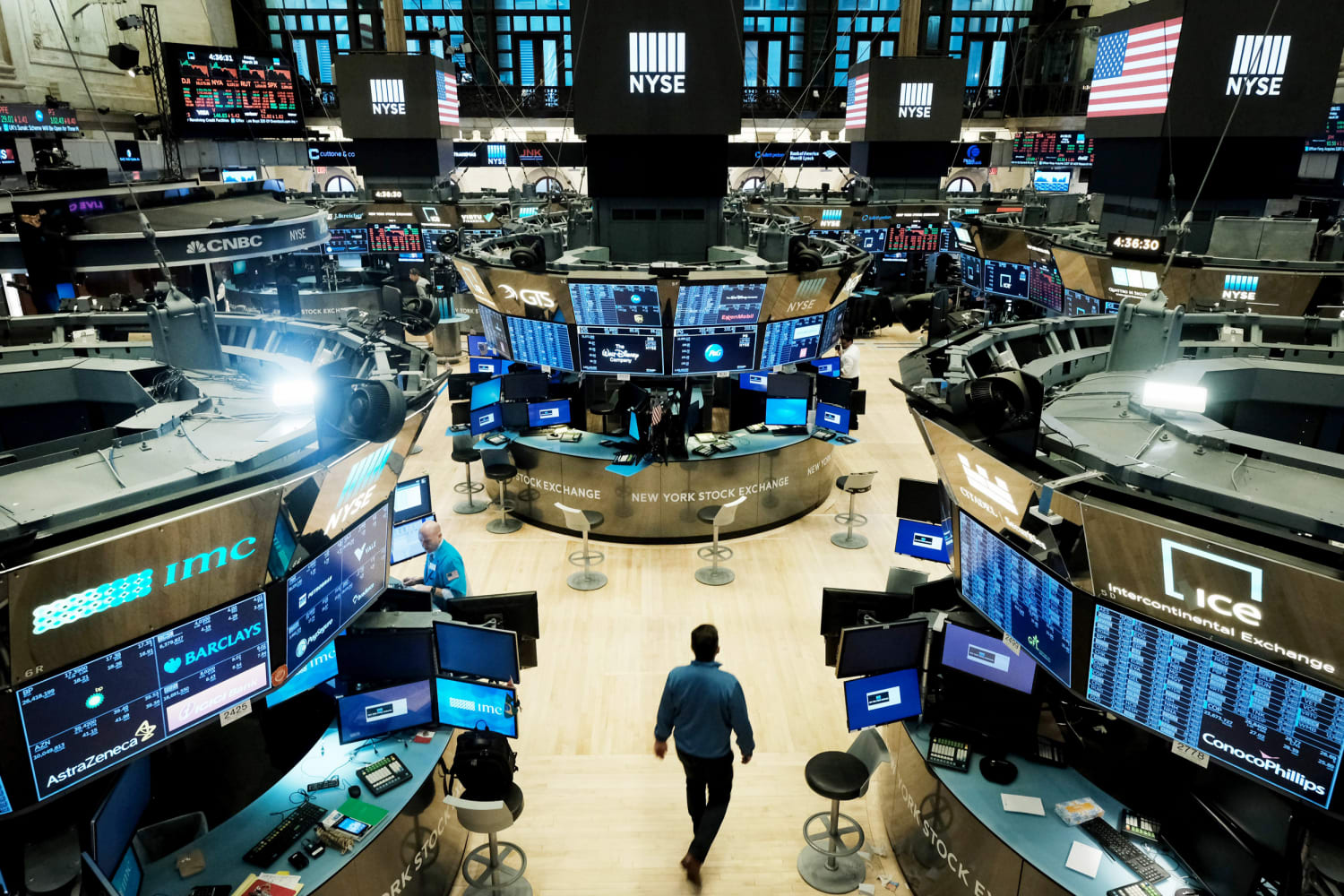
Source: NBC News
In theory, market prices should reflect all available information about an asset’s value. However, in practice, markets are influenced by emotion, speculation, and herd behavior, leading to what economist Robert Shiller termed “irrational exuberance.”
When investors focus only on short-term price movements, markets lose their function as efficient resource allocators. Instead of financing innovation and productive activity, they become driven by speculation and volatility.
Fisher’s quote is therefore a reminder that the health of financial markets depends on the ability of participants to look beyond immediate prices and evaluate the long-term value of what they are trading.
2 – Intrinsic Value vs. Market Price
The distinction between intrinsic value and market price lies at the heart of investing. The market price represents what buyers and sellers agree upon at a given moment. It fluctuates constantly, influenced by supply, demand, and investor psychology. Intrinsic value, on the other hand, is the true economic worth of an asset, based on fundamentals such as earnings potential, discounted cash flows, and long-term growth prospects.
Fisher, like Graham, believed that markets often misprice securities in the short term. The wise investor’s role is therefore to identify when the market price diverges from intrinsic value, and to act accordingly. This requires patience, analysis, and a willingness to go against the crowd.
This idea resonates particularly in the context of private companies and Private Equity. When a private equity firm buys a public company to take it private, it is often because it perceives a significant intrinsic value that the public market, obsessed with prices and quarterly results, has ignored or underestimated. By delisting it from the Stock Exchange, the firm can focus on long-term value creation, away from the pressures of public trading. The transaction itself is a materialization of the conviction that the market has confused price with value.
3 – Fundamental Analysis versus Technical Analysis
Fundamental analysis is the process of determining a company’s intrinsic value by studying its financial statements, business model, and broader environment. It involves assessing profitability, growth potential, competitive positioning, and management quality. Fisher elevated this approach by emphasizing qualitative aspects: how innovative a company is, how it treats employees, and what it is currently planning for the future.
In contrast, technical analysis focuses exclusively on studying past price movements and trading volumes to anticipate future market trends. It relies on charts, indicators (like moving averages or the RSI), and patterns to identify entry and exit points. The technical analyst knows the price perfectly, but the foundation of their strategy is that history (the price) repeats itself, without requiring an understanding of the fundamental “why” of the business.
Example of a technical analysis on the IBM stock

Fundamental analysis delves into balance sheets and income statements to construct a valuation (the value), while technical analysis interprets graphical signals and market statistics to determine the probable direction of the price. Fisher’s quote is a direct critique of this latter approach, as it completely dissociates price from its underlying economic reality.
4 – Active versus Passive Asset Management
Fisher’s opposition between price and value also resonates in a frequent debate in the asset management industry : active versus passive investing.
– Active management is based on the conviction that superior analysis can “beat the market” by precisely identifying undervalued (more value than price) or overvalued assets. Active managers, like Fisher, are the direct inheritors of the quest for intrinsic value.
– Passive management (index funds, ETFs) adopts a radically different approach. Instead of seeking value, it accepts the market price and aims to replicate an index’s performance. It is based on the Efficient Market Hypothesis, where prices are generally “fair.”
In a way, the passive investor only cares about the average price, and never looks at the underlying value of what he is buying. On the other hand, for an active investor, price is only a starting point of a reflection that must somehow lead to a good understanding of value.
My Opinion on this Quote
This quote immediately brings to mind the 2008 financial crisis. At the time, banks and investors were trading increasingly complex financial products (such as mortgage-backed securities and other structured instruments) whose complexity made it hard, if not impossible, to understand what they were actually made of. Everybody knew their price, but few questioned their real value. The result was a global collapse, driven by overconfidence and a lack of due diligence by many.
Finance should serve as a tool to support economic growth, and channel capital towards the most productive projects. But instead, it is too often turned into a casino, where speculation replaces understanding and greed overrides prudence. Fisher’s quote reminds us that financial markets should serve society, not the other way around.
Why Should You Be Interested in this Post?
Because Fisher’s insight remains as relevant today as it was decades ago. Whether you are investing, studying finance, or simply following the markets, remember that prices only tell part of the story. Always take the time to understand what lies beneath them: the business, the people, the ideas.
Knowing the price is easy. Understanding the value is not.
Related posts on the SimTrade blog
▶ Learn about the Tracking Error and its application to ETFs
▶ “Price is what you pay, value is what you get”. Warren Buffet
Useful Resources
Fisher, P. (1958). Common Stocks and Uncommon Profits. New York, NY: Harper & Brothers.
Graham, B. (1949). The Intelligent Investor. New York, NY: Harper & Brothers.
Buffett, W. E. (1977–present). Annual Letters to Shareholders of Berkshire Hathaway Inc. Omaha, NE: Berkshire Hathaway Inc.
About the Author
This article was written in January 2026 by Hadrien PUCHE (ESSEC Business School, Grande École Program, Master in Management, 2023-2027).
▶ Discover all articles by Hadrien PUCHE