
New on SimTrade?
Register for free and join the SimTrade community.
By connecting to this website you accept Terms of use.
 BioCellTech
You work for BioCellTech, a biotech company specialising in the development of drugs aimed at curing or alleviating the effects of various virus-based human diseases. During the simulation, you will receive news about BioCellTech, a company whose shares are traded on the SimTrade platform. You will be able to buy and sell shares of BioCellTech. Your goal is to maximize your trading gain at the end of the simulation. At the start of the simulation, you own an account consisting of €100,000 in cash and 1,000 BioCellTech shares. Given yesterday’s closing price of €100.55, the total value of your position is more than €200,000. The duration of the simulation is initially set to 10 minutes which corresponds to a 24-hour trading day. Using the timeline, you can increase or decrease the simulation speed at any time. You must complete the simulation for it to be valid for your grade. |
Which trades does the law prohibit? Buying or selling stocks (technically known as “trading”) can be legal or illegal:
It is common for CEOs, employees, consultants, lawyers, investment bankers, and other service providers to have access to private information (such as joint ventures or declining sales) before it becomes public. Penalties for insider trading are severe:
IMPORTANT: As an employee of BioCellTech, you must comply with the law every time you trade BioCellTech shares. Insider trading is a serious criminal offense. It is one of the most severely punished. Chances of being caught are substantial: the market authority constantly watches the trading activity of financial markets. Its investigation team relies on advanced algorithms and can access private communications (mobile phone, social networks, etc.). Our policy is designed to protect both you and the Company. As an employee, you may occasionally have access to inside information: ensure that you never use it for illegal purposes. Illustration: American media personality Martha Stewart sold shares of ImClone the day before the Drugs Administration announced it would not approve a new drug. Stewart received information from ImClone’s CEO, Samuel Waksal. Following the announcement, the stock price dropped sharply, and Stewart avoided losses of nearly $250,000. She was convicted of illegal insider trading, sentenced to five months in prison and five months of house arrest, and fined significantly. After her release, she was barred from serving as a company director for five years. |
Which trades does the law prohibit? Buying or selling stocks (technically known as “trading”) can be legal or illegal:
It is common for CEOs, employees, consultants, lawyers, investment bankers, and other service providers to have access to private information (such as joint ventures or declining sales) before it becomes public. Penalties for insider trading are severe:
IMPORTANT: As an employee of BioCellTech, every time you trade BioCellTech shares, you must comply with the law and also with BioCellTech’s ethical, moral and professional standards. Insider trading is not only a criminal offense but also violates the ethical, moral, and professional standards expected of the Company. Our policy aims to protect both you and the Company. As an employee, you may have access to insider information from time to time: make sure you do not use it for illegal or unethical purposes. Illustration: American media personality Martha Stewart sold shares of ImClone the day before the Drug Administration announced it would not approve a new drug. Stewart received this information from ImClone’s CEO, Samuel Waksal. Following the announcement, the stock price dropped sharply, and Stewart avoided losses of nearly $250,000. Martha Stewart was convicted of illegal insider trading. Before the scandal, the general public associated Martha Stewart and her businesses with credibility and integrity. Upon her conviction, Stewart's brands were ranked lower than Enron's. Following her release, the corporate misconduct left a lasting stain on her personal and professional reputation. |
Which trades does the law prohibit? Buying or selling stocks (technically known as “trading”) can be legal or illegal. Trading based on public information is legal, even if the trader is the CEO, an employee of the firm or any other insider. Typically, a CEO may decide to buy 1,000 shares of the corporation she works for. Trading based on nonpublic information that is likely to impact the share price (for examples information on earnings and merger plans) amounts to insider trading: it is illegal. It is not uncommon that the CEO, employees of the firm, as well as consultants, lawyers, investment bankers and other service providers for the issuer, know about a joint-venture project, decreasing sales, or any other private information about the issuer, before it becomes available to the public. Penalties for insider trading are severe:
▢ By checking this box I commit that I will not breach any of the requirements applying to lawful trading. |
Which trades does the law prohibit? Buying or selling stocks (technically known as “trading”) can be legal or illegal. Trading based on public information is legal, even if the trader is the CEO, an employee of the firm or any other insider. Typically, a CEO may decide to buy 1,000 shares of the corporation she works for. Trading based on nonpublic information that is likely to impact the share price (for examples information on earnings and merger plans) amounts to insider trading: it is illegal. It is not uncommon that the CEO, employees of the firm, as well as consultants, lawyers, investment bankers and other service providers for the issuer, know about a joint-venture project, decreasing sales, or any other private information about the issuer, before it becomes available to the public. Penalties for insider trading are severe:
IMPORTANT: as a trader you might find it difficult to visualize who are the victims of illegal insider trading. But there are some damaging effects:
|
Which trades does the law prohibit? Buying or selling stocks (technically known as “trading”) can be legal or illegal. Trading based on public information is legal, even if the trader is the CEO, an employee of the firm or any other insider. Typically, a CEO may decide to buy 1,000 shares of the corporation she works for. Trading based on nonpublic information that is likely to impact the share price (for examples information on earnings and merger plans) amounts to insider trading: it is illegal. It is not uncommon that the CEO, employees of the firm, as well as consultants, lawyers, investment bankers and other service providers for the issuer, know about a joint-venture project, decreasing sales, or any other private information about the issuer, before it becomes available to the public. Penalties for insider trading are severe:
Did you know? 99.9997% of market participants never engage in insider trading activity. |
Which trades does the law prohibit? Buying or selling stocks (technically known as “trading”) can be legal or illegal. Trading based on public information is legal, even if the trader is the CEO, an employee of the firm or any other insider. Typically, a CEO may decide to buy 1,000 shares of the corporation she works for. Trading based on nonpublic information that is likely to impact the share price (for examples information on earnings and merger plans) amounts to insider trading: it is illegal. It is not uncommon that the CEO, employees of the firm, as well as consultants, lawyers, investment bankers and other service providers for the issuer, know about a joint-venture project, decreasing sales, or any other private information about the issuer, before it becomes available to the public. Penalties for insider trading are severe:
The financial regulatory authority is continuously watching the trading activity of market participants. It has direct access to your trading data. |
Your grade for this simulation (100 points) takes into account the following elements:
|
|
BioCellTech operates in a highly competitive environment, with numerous biotech companies striving to treat the same diseases. Developing a new drug requires substantial upfront investments and can take several years (sometimes up to ten or fifteen years). Moreover, products cannot be commercialized until they successfully pass rigorous regulatory processes in each target market. The Medicine and Drug Authority (MDA) grants market authorization only after companies complete a series of extensive tests and procedures to ensure product safety. The success of a new product in BioCellTech’s sector is thus highly uncertain and a biotech company's stock price can fluctuate significantly depending on its ability to secure market approvals. Other factors that may influence success and stock price include public perception, product effectiveness, managerial expertise, and supplier relationships. Since its initial public offering two years ago, BioCellTech has achieved several commercial successes, driving its stock price up by 80%. Building on this momentum, the company now plans to launch new product lines. With growing and increasingly recurrent revenues, BioCellTech intends to raise debt from banks and capital markets. Additionally, its management is considering hiring new employees and expanding into new markets and territories to support the company’s continued growth and scaling efforts. |
 |
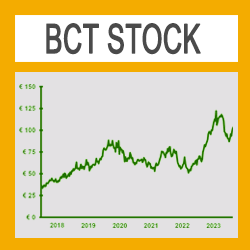
After several decades of rapid growth, BioCellTech a successful initial public offering (IPO) in 2017. Since its introduction in the stock market, the stock price of BioCellTech (code: BCT) has steadily increased from its introductory price of €35. BCT shares are currently priced at approximately €50. |
 |
|
Today, several events related to BioCellTech will happen and may have a significant -positive or negative- impact on BCT share price. Information about these events qualifies as inside information until it becomes public and available to all market participants. Trading upon inside information before it gets public will allow you to make a profit, but it constitutes insider trading. Events of the day BioCellTech is waiting for the decision of the Medicine and Drug Authority (MDA) about the authorization for its new revolutionary product. The announcement of this decision by the MDA will have a significant impact on BCT share price: in case of a positive decision, the share price will sharply increase by 20% or more; in case of a negative decision, the share price will sharply decrease by 20% or more. BioCellTech will also announce its profits for the last quarter. If the realized profits are higher than the market forecast, BCT share price will increase following the company’s announcement. On the contrary, if the realized profits are lower than the market forecast, BCT share price will decrease. Public information / Inside information Events will happen during the trading session. You will be informed about each of these events before they occur, which means that you will hold inside information about them. Inside information privately disclosed to you will appear in red in the ticker tape at the top of the Trading page like this: INSERT GIF HERE Public information announced to all market participants will appear in black in the ticker tape at the top of the Trading page like this: INSERT GIF HERE Inside information privately disclosed to you will become public information announced to all market participants after three hours. If you trade after you receive inside information but before the information is publicly disclosed, you can expect to make a profit, but you have also engaged in insider trading. The entire trading session will last for 10 minutes. Your objective is to maximise the value of your portfolio (composed of a mix of cash and of BCT shares) by the end of the trading session. In case you engage in insider trading, you may or may not be caught and sanctioned. |
Teaching objectives: the BioCellTech simulation will enable you to become familiar with the key concept of market efficiency and how the news flow impacts the evolution of financial assets market prices. You will also discover key determinants of success for a company in the Food and Beverages sector. Learning goals: the BioCellTech simulation will also allow you to acquire the following skills:
Before or after launching this simulation, you can obtain additional information on the financial markets by taking courses related to the simulation. |
 |
The data regarding your trading activity and your answers to the survey in the BioCellTech simulation will be used as part of a research project on behavioral finance carried out by Geneviève Helleringer (ESSEC Business School & University of Oxford), Kosmas Kaprinis (IE University), François Longin (ESSEC Business School) and Paul Oudin (University of Oxford). The data will be used anonymously. |
 |
 |
Professor Geneviève Helleringer
|
 |
Kosmas Kaprinis
|
 |
Professor François Longin
|
 |
Paul Oudin
|